Marine researchers are providing crucial context following an unprecedented cluster of shark encounters along Australia’s eastern coastline, advocating for scientific understanding over knee-jerk conservation measures. Between January 18-20, four separate incidents occurred within a 48-hour window, three concentrated within a mere 15-kilometer radius near Sydney.
The sequence began when a 12-year-old boy sustained critical injuries while swimming in Sydney Harbour. Within hours, an 11-year-old’s surfboard was bitten at Dee Why beach, followed by a serious attack on a man at Manly beach that required emergency hospitalization. A fourth incident occurred 300 kilometers north when a surfer received chest injuries after a shark bit his board.
University of Sydney public policy expert Dr. Chris Pepin-Neff, with two decades of shark research experience, described the clustering as “extraordinary” in both temporal and geographical proximity. The incidents prompted widespread beach closures and renewed calls for shark culling programs from concerned communities.
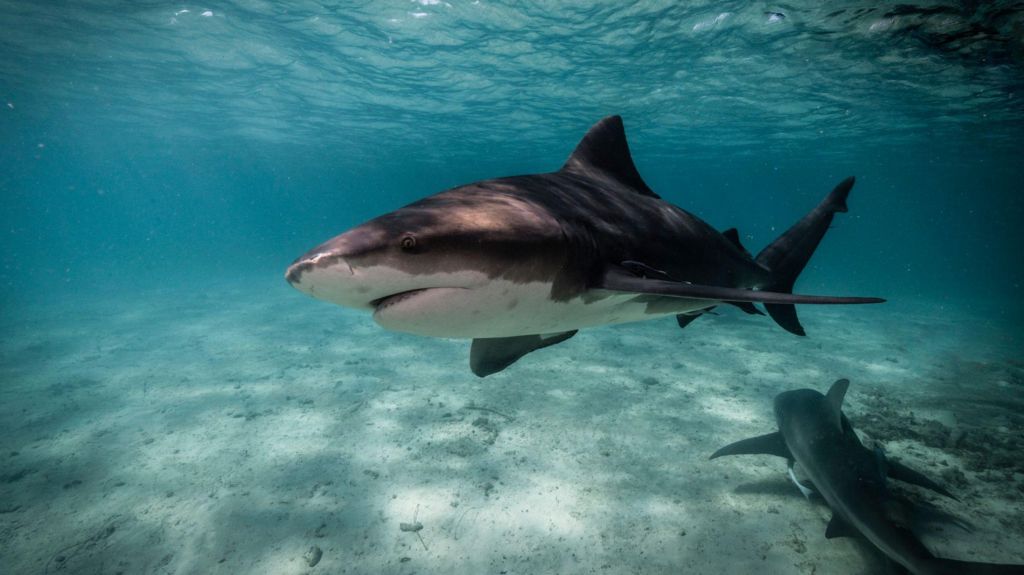
However, scientific evidence points to environmental factors rather than increased shark aggression. Researchers identify the exceptional rainfall preceding the incidents – 127 millimeters within 24 hours, representing Sydney’s wettest January day in 38 years – as creating ideal conditions for bull sharks, believed responsible for the Sydney incidents.
Dr. Rebecca Olive, senior research fellow at RMIT University, explains: “Bull sharks thrive in warm, brackish water that most other sharks avoid. The freshwater runoff created perfect conditions for them, likely flushing nutrients and sewage into coastal waters that attracted bait fish and subsequently sharks.”
Dr. Pepin-Neff characterizes this as a “perfect storm” scenario where low salinity water triggered a “biodiversity explosion” bringing bait fish and sharks closer to shore simultaneously.
Statistical analysis reveals that while recorded shark encounters have gradually increased from 8-10 annually in the 1990s to mid-20s in recent decades, this reflects improved reporting systems and human behavioral factors rather than heightened shark aggression. Coastal population growth, increased water sports participation, and advanced wetsuit technology enabling longer ocean stays all contribute to higher encounter probabilities.
Critically, researchers emphasize that the rate of shark bites hasn’t increased proportionally to human ocean activity. Dr. Olive notes that “given how many people use the ocean daily, incidents are relatively uncommon, and fatalities are even rarer.”
The researchers identify problematic language around shark encounters, where sightings, encounters, and bites become conflated under the emotionally charged “attack” terminology, distorting public risk perception.
Scientific consensus firmly rejects culling as an effective safety strategy. Dr. Pepin-Neff states unequivocally: “It just doesn’t work. It makes politicians feel better, but it makes nobody in the water any safer.” The variable isn’t shark populations but attractants drawing them near shore.
Researchers recommend practical risk mitigation including avoiding water activities after heavy rainfall, creating designated shark enclosures for swimming, and adopting a more realistic understanding of marine environments.
Dr. Pepin-Neff concludes with a crucial perspective shift: “We must treat beaches like bushland – Australians understand wilderness navigation. We need to reinforce that the ocean remains wild space. The ocean is never completely safe, and sharks aren’t always dangerous. We’re in their way, not on their menu.”