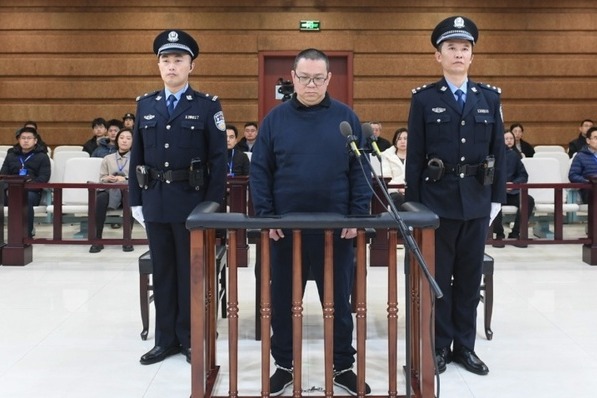
In a landmark demonstration of China’s intensified anti-corruption campaign, former China Huarong International Holdings general manager Bai Tianhui was executed on Tuesday, December 9, 2025. The execution followed the Supreme People’s Court’s final validation of his death sentence for accepting bribes exceeding 1.1 billion yuan ($156 million).
The Tianjin No. 2 Intermediate People’s Court carried out the sentence after formally notifying Bai of the supreme court’s decision and granting him a final meeting with family members. This concludes a legal process that began with his initial conviction on May 28, 2024, when he received the death penalty, lifetime deprivation of political rights, and confiscation of all personal assets.
According to judicial authorities, between 2014 and 2018, Bai systematically exploited his executive positions to illicitly benefit certain entities in project acquisitions and corporate financing operations. The Supreme People’s Court characterized the case as exceptionally severe, noting the ‘extremely large’ bribe amounts, ‘extremely serious’ offense circumstances, ‘extremely negative’ social impact, and ‘extremely huge’ losses to national and public interests.
The case represents the second major execution within China Huarong Asset Management’s leadership, following the 2021 execution of former chairman Lai Xiaomin for accepting 1.78 billion yuan in bribes. China’s legal framework requires all death sentences to undergo mandatory review by the Supreme People’s Court before execution, ensuring judicial oversight of capital punishment cases.
This development occurs amidst heightened judicial scrutiny of corruption cases, with top courts recently demanding severe penalties for grassroots corruption offenses, signaling continued commitment to anti-graft measures across all levels of society.