In a packed northern Virginia venue hosting a Chinese-language comedy show on a recent weekend afternoon, a host threw a casual question out to the crowd: “What food do you all love the most?” The loudest, most unanimous answer that bounced off the hall walls was not a traditional Chinese dish — it was Chick-fil-A. Grinning, the host shot back with a joke that landed perfectly with the audience: “You all still haven’t won the H-1B lottery, huh?”
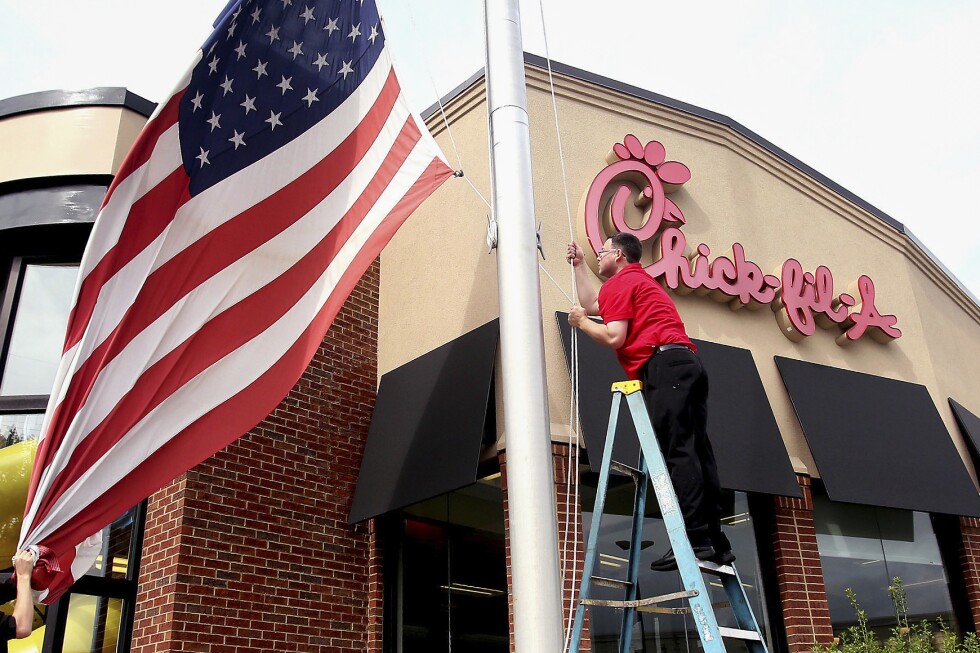
That quick quip resonates deeply across Chinese student and immigrant communities across the United States, where a growing number of visa applicants have turned to an unexpected good luck charm: the popular American fast-food chicken chain. The trend has nothing to do with the taste of Chick-fil-A’s signature sandwiches, and everything to do with a clever phonetic pun. The brand name “Chick-fil-A” sounds strikingly similar to the Mandarin phrase meaning “check files” — a connection that, for applicants navigating the complicated, often arbitrary U.S. visa application process, has transformed the chain into a symbol of good fortune. It doesn’t hurt that Chick-fil-A has no locations in mainland China, making the little ritual feel like an inside tradition unique to Chinese immigrants in the U.S.
For many applicants, the ritual goes far beyond just grabbing a meal. Zhou Yilu, a 38-year-old AI software engineer based in Wilmington, Delaware who has navigated four different visa categories over his 14 years in the U.S., says eating at Chick-fil-A makes him feel one step closer to securing permanent residency. After years of last-minute approvals and endless rounds of extra paperwork, he turned to the chicken chain superstition when his stress over visa status hit its peak.
The trend has been circulating in Chinese immigrant circles for years, gaining particular traction around the annual H-1B work visa lottery — a random selection process that has grown increasingly competitive as caps remain fixed while demand surges. To channel good luck, some creative applicants 3D-print Chick-fil-A logos on custom coasters, others embroider the brand mark into small cross-stitch keychains, and many swap their social media profile pictures to the chain’s iconic red logo — often turning the graphic green, a nod to the ultimate goal of a U.S. green card. Chick-fil-A has not responded to multiple requests for comment on the grassroots trend.
This fondness for pun-based good luck rituals is nothing new in Chinese culture. The tradition of eating apples on Christmas Eve grew from the phonetic link between “pingguo” (apple in Mandarin) and “ping’an” (peace), while brides often carry bouquets of lettuce at weddings because “shengcai” (lettuce) sounds identical to the phrase for “gaining wealth.” Conversely, the number four is widely avoided because its pronunciation matches the word for death. What makes the Chick-fil-A trend different is what it reveals about the extraordinary stress and uncertainty facing skilled Chinese immigrants navigating the U.S. immigration system.
In 2024 alone, more than 46,000 Chinese students and workers received H-1B visa approvals, accounting for 11.7% of all approved visas — making China the second-largest country of origin for the program, behind only India at 70%. Even with high-level education and in-demand professional careers, applicants face arbitrary odds and growing barriers. Fan Wu, a data scientist based in Indianapolis, did everything right: he changed his social media profile to the Chick-fil-A logo and even traveled to a Japanese Taoist temple in Hawaii to pray for a winning lottery slot. He still didn’t get picked. “The lottery is pure chance, it all depends on luck,” he explained. “We need another bit of luck-based ritual to match that.”
The demand for good fortune around visa lotteries has even spawned a new cross-border service industry. On the Chinese social platform Xiaohongshu, 24-year-old Beijing-based Meng Yanqing receives requests from visa seekers in the U.S. to pray on their behalf at Beijing’s popular Lama Temple. For each client, he lines up for entry, holds a paper with the applicant’s personal details — including passport number and birth date — for “precise positioning” of the prayer request, and often arranges to ship consecrated temple bracelets back to clients across the Pacific. “I respect what they believe, they have a real need, and I provide the service,” Meng said. “I truly hope they get the results they want.”
Anxiety around U.S. visa status has only grown in recent months. Earlier this year, the Trump administration’s abrupt announcement of a new $100,000 fee for H-1B visas sent waves of panic through Chinese immigrant communities, before officials clarified the rule only applies to new applicant categories. The whiplash added to an already stressful environment that already includes language barriers, cultural adjustment challenges, and a tight competitive job market.
Experts note that the H-1B program has long been a pipeline for the U.S. to attract top global talent, benefiting both the American economy and innovation ecosystem. “This is a real talent pipeline,” said Juliet Gelatt, associate director of the U.S. Program at the Washington-based Migration Policy Institute. “As a country and an economy, we have really benefited from bringing in smart, young people from all over the world, including from China.”
But growing suspicion of Chinese immigrants, particularly those working in high-tech sectors, has added extra layers of difficulty, and experts warn this trend is eroding the U.S.’s ability to attract the world’s best talent. One 28-year-old manager at a U.S. new energy company, who only agreed to speak on condition of anonymity using just his surname Yang over fears of jeopardizing his visa, finally changed his social media profile to the Chick-fil-A logo after months of waiting. “It feels like living under someone else’s roof,” he said of his uncertain immigration status.
Current U.S. rules limit access to the H-1B lottery. F-1 student visa holders can only work for a limited time through the Optional Practical Training (OPT) program — three years for STEM majors, just one year for all other fields — before they need to secure an H-1B visa to stay and work in the country legally. With odds stacked against them, many turn to any small ritual that might tip the scale in their favor.
For Harriet Peng, a data analyst based in northern Virginia, eating Chick-fil-A sandwiches and keeping a Chick-fil-A T-shirt draped over her office chair wasn’t enough. After losing the H-1B lottery multiple years in a row, she traveled to a temple in upstate New York to pray in person, joking that she was “making efforts using scientific materialist methods in metaphysics.” The temple houses deities dedicated to nearly every aspect of life, from fortune to childbirth — but there is no god of visas. Still, Peng knelt at nearly every altar just in case. “I prayed to all of them, you never know — they all know each other, right?”