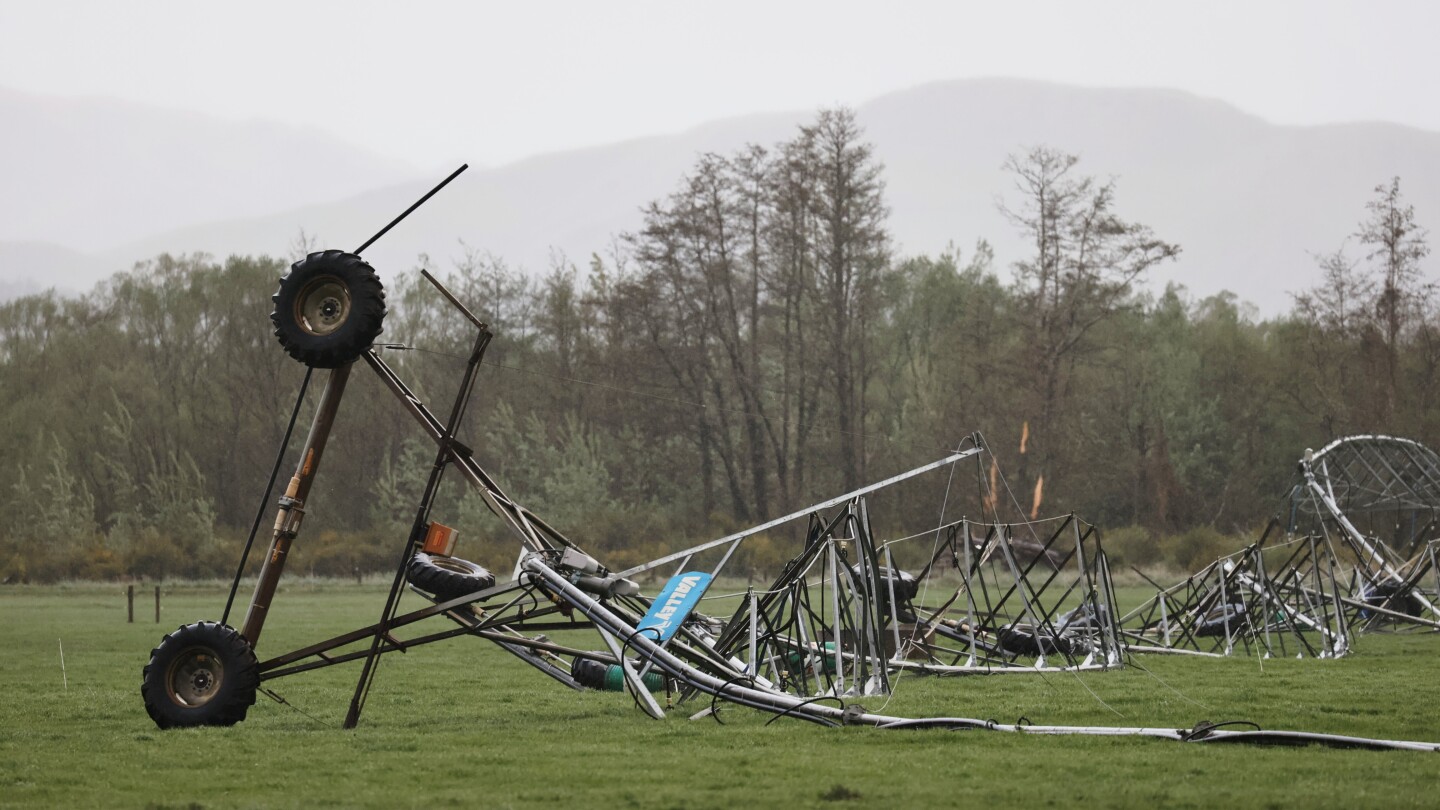
New Zealand experienced a tumultuous day on Thursday as ferocious winds wreaked havoc across the nation for the second time in a week. The powerful gales, reaching speeds of up to 230 km/h in some areas, led to widespread disruptions, including the cancellation of over 200 flights, electricity blackouts, and the closure of schools and highways. The lower North Island, home to the capital Wellington, and parts of the South Island, including Christchurch, bore the brunt of the storm. The national weather service, MetService, issued rare ‘red’ wind warnings, the highest alert level, for several regions. Fortunately, no fatalities or serious injuries were reported, unlike Monday’s storm, which claimed the life of a Wellington man struck by a falling tree branch.
The severe weather also disrupted a planned nationwide strike by health and education workers, marking one of the largest industrial actions in decades. Over 100,000 workers, represented by four unions, walked off the job for four hours after negotiations with the government over pay and working conditions collapsed. While some rallies were canceled due to the weather, thousands of workers still marched in cities like Auckland and Hamilton, and smaller demonstrations took place in towns unaffected by the storm. Hospitals and emergency rooms remained operational, but the government urged the public to seek medical attention only for urgent matters.
The strike highlighted growing tensions between the center-right government and workers’ unions, with ministers accusing the action of being politically motivated. Union leaders countered that they had also organized strikes under the previous center-left administration. The strike involved a diverse group of workers, including teachers, doctors, nurses, and social workers, who demanded better pay, improved staffing levels, and enhanced working conditions. The industrial action occurred against a backdrop of significant government spending cuts and a record exodus of New Zealanders, particularly medical professionals, to Australia, where salaries are higher and living costs are lower.
As the storm’s impact began to ease by Friday, several major highways remained closed, and residents in parts of the South Island were on alert for potential river flooding. Authorities also implemented bans on fireworks and fires due to the heightened risk of wildfires, which had already been exacerbated by the strong winds. New Zealand’s geographical location and mountainous terrain make it prone to extreme weather events, which can occur throughout the year.