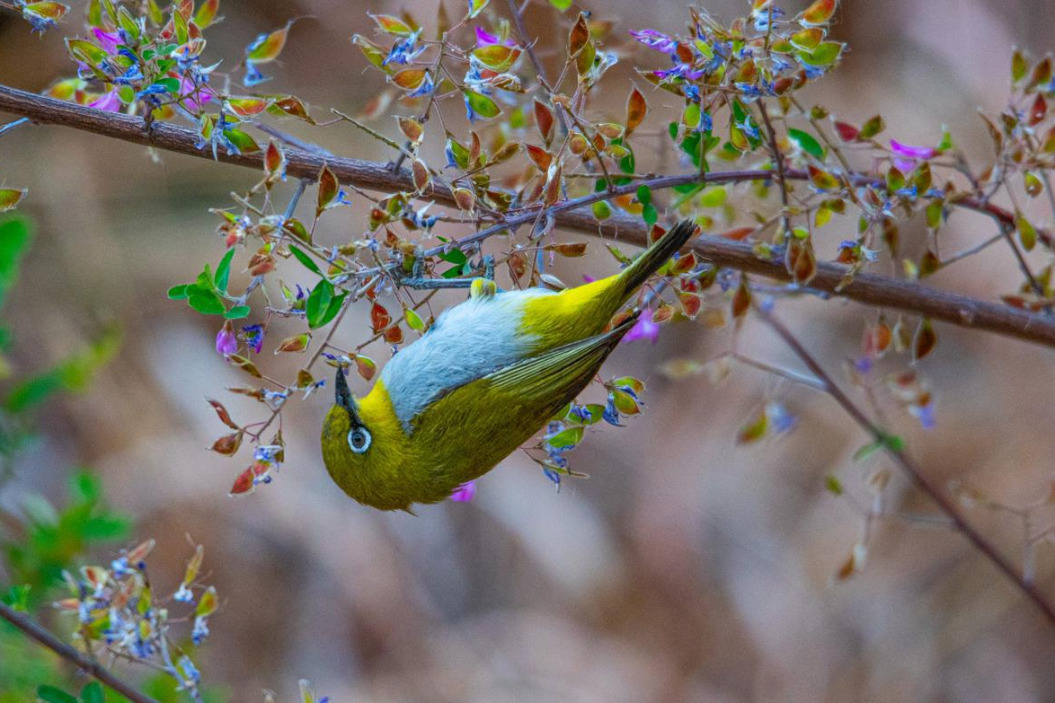
After more than four decades since the last major international joint expedition to the region, a landmark three-year scientific effort has produced the first comprehensive map of wildlife populations and ecosystem health across Cangshan Mountain in southwest China’s Yunnan province, solidifying the site’s reputation as one of the world’s critical biodiversity hotspots. The large-scale collaborative project, which wrapped up its field and analytical work ahead of the April 2026 announcement, spanned nearly 1,000 square kilometers of the mountain range located within Dali Bai Autonomous Prefecture, bringing together experts and resources from multiple leading Chinese research institutions. Zhong Mingchuan, core team member and director of the Yunnan Academy of Forestry and Grassland, noted that this new study marks the most rigorous, systematic assessment of the mountain’s full ecological profile since international researchers conducted joint surveys of the area in the 1980s. Prior to this initiative, much of the existing data on Cangshan’s diverse flora and fauna was fragmented, outdated, or limited to specific taxonomic groups, leaving major gaps in scientific understanding of how the region’s ecosystems have shifted amid global climate change and local human activity over the past generation. The comprehensive mapping effort deployed a mix of traditional field observation, camera trapping, genetic sampling, and habitat assessment techniques to document every documented and newly discovered species across the mountain’s varied elevation zones, from subtropical lowland valleys to alpine tundra at the highest peaks. Researchers involved in the project emphasized that the data collected will serve as a critical baseline for future long-term ecological monitoring, as well as inform evidence-based conservation policies and sustainable land management practices for the protected area. The findings are also expected to support broader global research into patterns of biodiversity in the Hengduan Mountains region, a global priority area for conservation due to its exceptionally high concentration of endemic species found nowhere else on Earth.