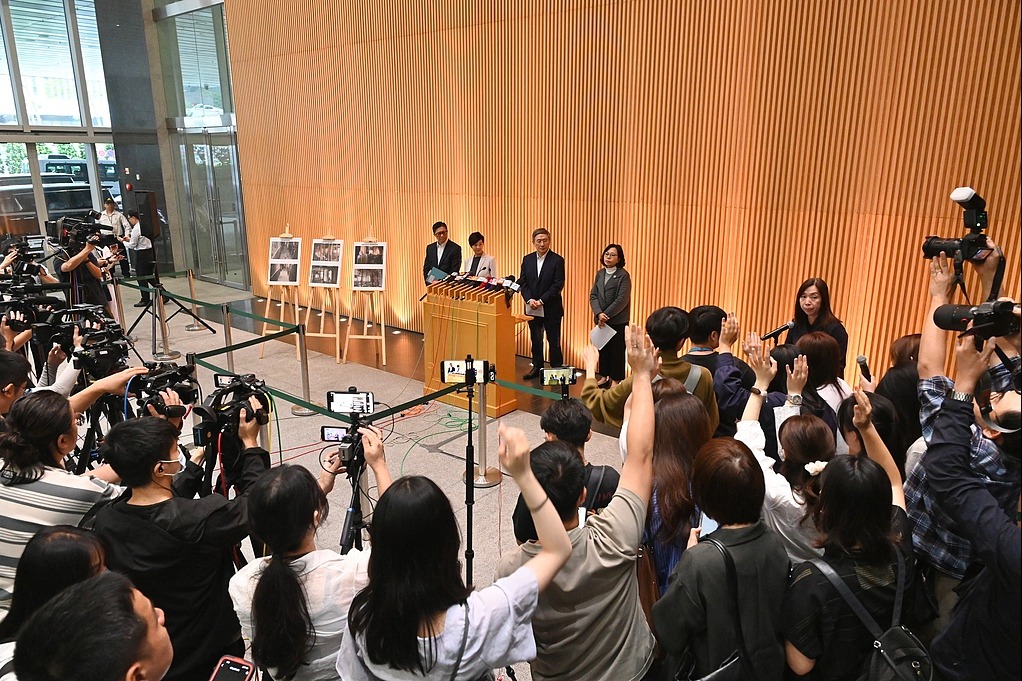
An ongoing judge-led independent investigation into Hong Kong’s deadliest November residential blaze has uncovered a critical failure: all eight fire water tanks serving Tai Po district’s Wang Fuk Court were completely drained when the fire broke out, a consequence of unorthodox maintenance tiling works that dragged on for months. The tragedy, which claimed 168 lives, prompted Hong Kong Chief Executive John Lee Ka-chiu to convene the independent inquiry committee, which has held six weeks of public evidential hearings starting March 19, with testimony already heard from 20 residents of the affected public housing estate.
One resident’s firsthand account, delivered to the committee Monday, laid bare the immediate danger created by the empty tanks. When he attempted to deploy a building fire hose to contain the spreading flames on November 26, he turned the valve to find no water emerged at all, leaving him unable to slow the blaze before emergency services arrived.
Testimony from the industry professionals responsible for the estate’s fire safety inspections continued during Tuesday’s sixth hearing. Chung Kit-man, director of Victory Fire Engineering Ltd, the registered contractor that completed a mandatory fire safety inspection of Wang Fuk Court in March 2025, told the committee he was aware the tanks had been drained one month ahead of the blaze to accommodate the maintenance works.
Chung explained that his team received reports from on-site workers that no water tank leaks were detected during the March 2025 inspection. However, official inspection forms bearing Chung’s signature explicitly flagged issues with the water tanks. Chung admitted that his employees likely made an error when completing the documentation, and that he had failed to catch the mistake before signing off.
Li Chunyin, a frontline worker with Victory Fire who carried out the inspection, backed up that account, telling the committee he had directly inspected the interior of the concrete water tanks and confirmed no tiles were installed on their inner surfaces at the time of the check. He added that none of the eight blocks’ tanks showed any signs of leakage, so no repairs were recommended by his team.
Committee counsel Lee Shu-wun presented a pricing document from the estate’s maintenance consultant, Will Power Architects Co, that confirmed the scope of works included applying white ceramic tiling to the interior of the fire water tanks — a practice Chung described as highly unusual for non-potable water storage used exclusively for firefighting.
“To my knowledge, fire water tanks only exist to store water for emergency firefighting, so there is no requirement for the water to meet drinking water standards,” Chung told the inquiry. “I cannot understand why this tiling maintenance took three full months to complete.”
To execute the tiling works, main contractor Prestige Construction and Engineering Co subcontracted the coordination of system shutdowns to another fire service installation firm, China Status Development and Engineering Co. This subcontractor was responsible for submitting applications to the Hong Kong Fire Services Department to approve temporary shutdowns of the building’s fire hydrant and hose network.
Earlier hearings revealed a staggering procedural failure: China Status never sent any of its own personnel to inspect the system or verify whether a prolonged full-system shutdown was actually necessary for the works. Despite this, the firm submitted 16 separate shutdown applications, resulting in the entire firefighting water system being disabled for more than six months starting in April 2025.
During that extended shutdown, Victory Fire workers conducting routine checks discovered the rooftop water tanks of three blocks were empty on October 16, 2025, and soon confirmed all eight blocks’ tanks had been drained for the ongoing tiling repairs. A week before the blaze, on November 19, inspection teams also found that the main power switch controlling the fire booster pump for all eight blocks had been switched off.
When questioned about his firm’s response, Chung said he and his workers requested an official shutdown notice from the Wang Fuk Court building management team but never received one. He admitted that his team never issued a formal warning or formal safety advice to management about the risks of a prolonged shutdown, citing a long-unspoken norm across Hong Kong’s fire safety industry: “the mindset of not telling other industry players how to do their jobs.”