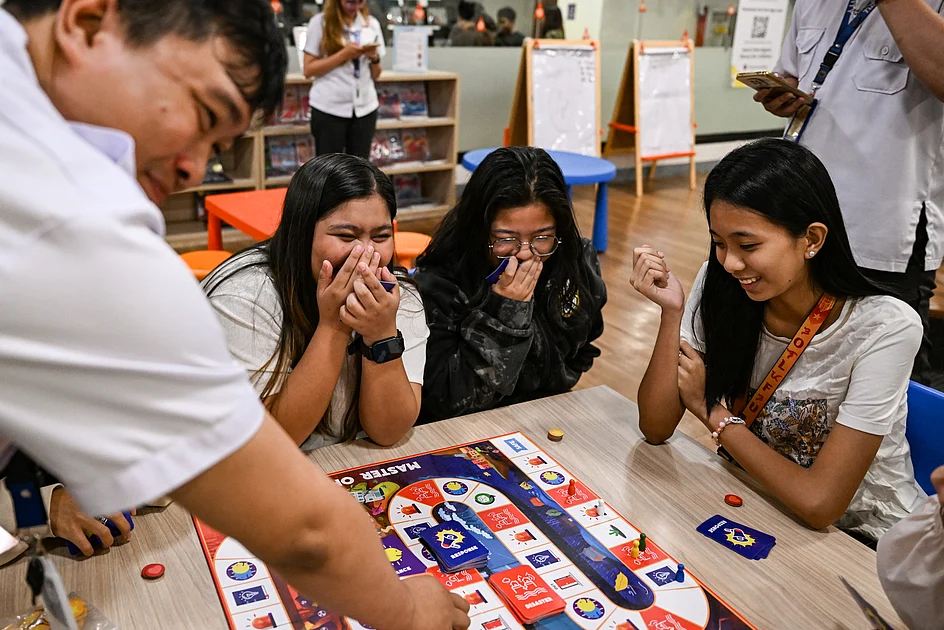
In a groundbreaking approach to disaster education, the Philippines has distributed over 10,000 copies of an innovative board game designed to teach disaster preparedness to citizens as young as nine years old. The game, titled “Master of Disaster,” represents a creative response to the nation’s status as the world’s most disaster-prone country for four consecutive years.
Developed by the Asia Society for Social Improvement and Sustainable Transformation (ASSIST) following the devastating impact of Super Typhoon Haiyan in 2013, the game has been recently updated to address climate change-exacerbated events including landslides, droughts, and heatwaves. The tactical game requires players to navigate various disaster scenarios through dice rolls and action cards, with participants demonstrating proper response techniques and earning “hero tokens” for successful interventions.
The initiative addresses a critical gap in national preparedness, with statistics indicating fewer than half of Filipinos have participated in disaster drills or maintain first-aid kits. This educational tool has gained particular relevance following recent tragedies, including November’s back-to-back typhoons that claimed nearly 300 lives and September’s 6.9-magnitude earthquake that resulted in 79 fatalities around Cebu.
Government authorities from the Department of Science and Technology are currently evaluating the game’s effectiveness through pilot programs in Valenzuela City, where routine flooding regularly disrupts community life. While quantitative data remains preliminary, developers report significant improvements in players’ disaster readiness knowledge, with particular focus on extending the program to economically vulnerable communities most affected by climate change impacts.
The program emphasizes youth engagement as essential to developing a nationwide disaster resilience mindset, with participants like 17-year-old Ansherina Agasen already sharing acquired knowledge with classmates and community members, effectively creating a multiplier effect for lifesaving information.