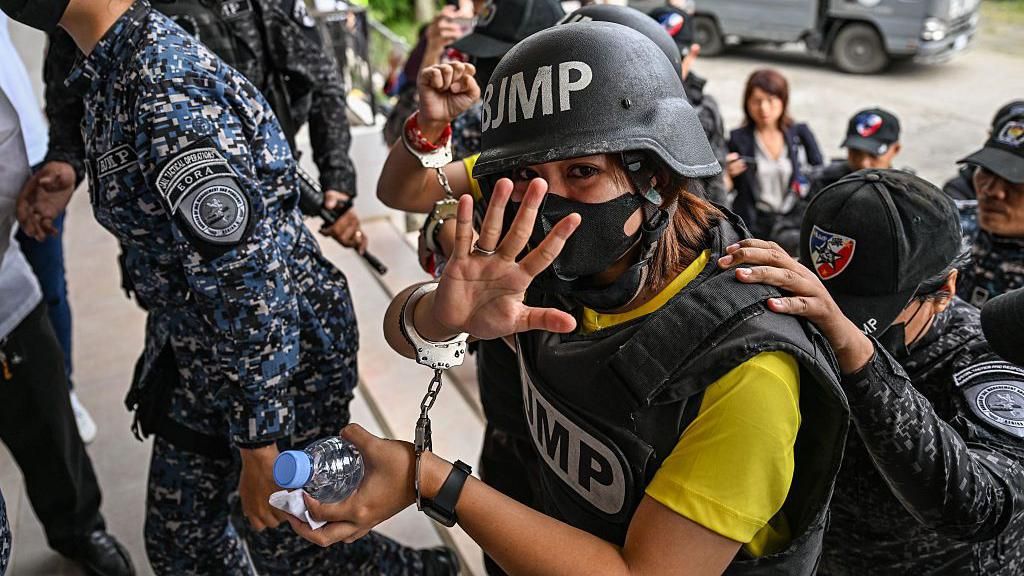
In a landmark case raising alarm across global press freedom circles, Filipino journalist Frenchie Mae Cumpio has been convicted of financing terrorism and sentenced to a minimum of twelve years imprisonment. The verdict arrives after an extensive six-year pretrial detention period during which the 26-year-old reporter maintained her innocence against what advocacy groups characterize as politically motivated charges.
The legal proceedings stem from a February 2020 nighttime raid conducted by joint police and military forces on Cumpio’s residence in Tacloban City. Authorities reported discovering a firearm, hand grenade, and communist propaganda materials during the operation, alongside approximately several thousand pounds in cash. While the court ultimately dismissed weapons possession charges due to insufficient evidence, it upheld the terrorism financing allegation based on the seized funds.
Cumpio’s defense team contends the money constituted legitimate donations for Eastern Vista, the independent news platform where she served as director, and her community radio program on Aksyon Radyo-Tacloban DYVL. Prior to her arrest, Cumpio had established a reporting record focusing on military and police misconduct in Eastern Visayas, a region experiencing persistent poverty and social unrest.
Press freedom organizations have unanimously condemned the judicial outcome. The National Union of Journalists of the Philippines labeled the conviction ‘a fabricated case designed to silence critical reporting,’ while international watchdog Reporters Without Borders highlighted the Philippines’ deteriorating environment for media professionals. Women’s media associations particularly emphasized the gendered dimension of the case, noting Cumpio’s prosecution represents ‘state-sponsored silencing of female journalists.’
The verdict occurs against a backdrop of increasing legal harassment against journalists under the Philippines’ anti-terrorism legislation. Human rights monitors document numerous similar cases where terrorism charges have been allegedly weaponized against government critics. This judicial decision establishes a concerning precedent that may further constrain reporting on marginalized communities and official misconduct throughout the archipelago nation.