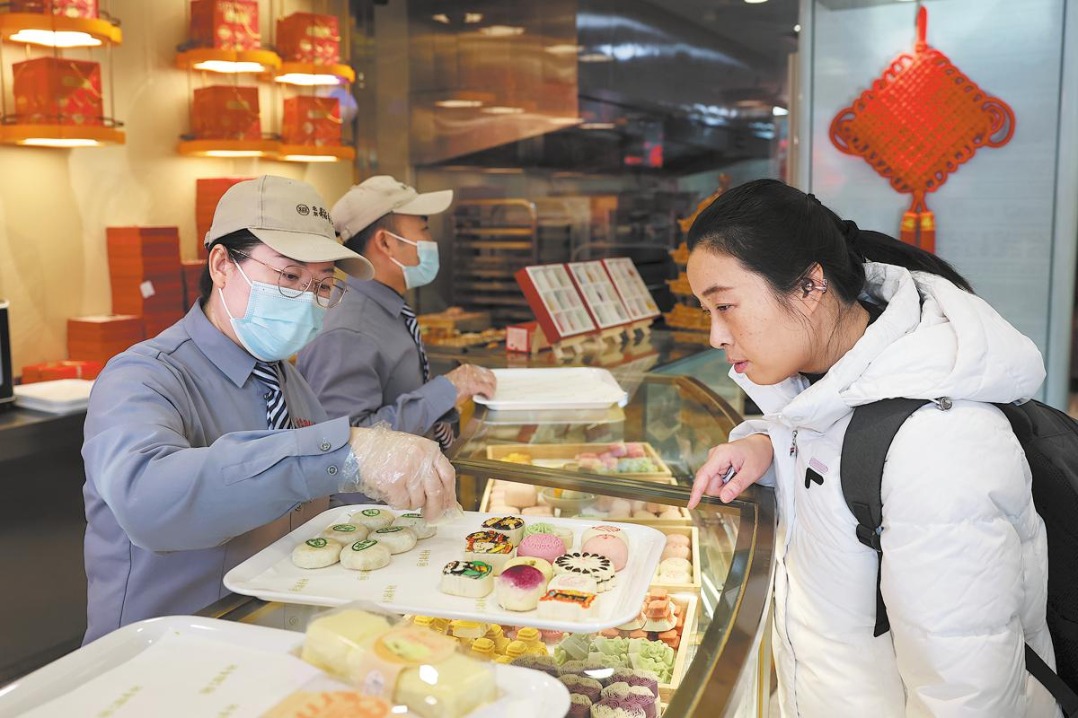
The ancient stone-paved lanes of Beijing’s Longfusi commercial district came alive with festive energy days before Spring Festival, adorned with swaying red lanterns and filled with the aromatic blend of traditional pastries, pickles, and freshly prepared snacks. This historic neighborhood became the focus of national attention when President Xi Jinping conducted an inspection tour through its bustling holiday market, highlighting the significance of preserving cultural heritage while embracing innovation.
At Beijing Daoxiangcun’s flagship store, manager Cao Siyuan recounted the President’s engagement with traditional pastry artisans. “He shared childhood memories of purchasing pastries here and showed genuine interest in our culturally-inspired new developments,” Cao noted. President Xi observed master bakers creating traditional confections, examined festive gift selections, and purchased several New Year snacks while encouraging the preservation and strengthening of Beijing’s time-honored brands.
The visit triggered a remarkable surge in visitor numbers, with many customers seeking to experience the festive specialties firsthand. Certain products gained immediate popularity, requiring increased production to meet holiday demand. The brand has successfully merged tradition with innovation, creating pastries shaped like musical instruments, ancient clothing, and Beijing landmarks that allow tourists to take home edible souvenirs of the city’s scenery.
At Liubiju’s pickle booth, a 590-year-old establishment, senior technician Chen Jie described the President’s detailed inquiry into their heritage products. Xi, who revealed he also consumes Liubiju pickles, examined intangible cultural heritage items including sweet sauce cucumbers and handcrafted sugar garlic—a delicacy requiring approximately 150 days and eight manual procedures to complete. His description of their products as ‘premium pickles’ represented significant recognition for the brand.
The Fengnian Guanchang store demonstrated how traditional Beijing snacks evolve while maintaining authenticity. Manager Shi Huanping explained how their signature dish—a sweet potato starch creation with crispy exterior and tender interior—has been complemented with handmade desserts like almond tofu and pea flour cakes to attract younger demographics. “Being time-honored doesn’t mean standing still. It means adapting while preserving what matters most,” Shi emphasized.
Traditional paper handicraft inheritor Li Mei experienced a breakthrough moment demonstrating her revitalized paper flipping flowers craft. Through material and design innovations, she has expanded playable variations from few to nearly twenty, making the tradition more colorful and appealing to children. “Tradition survives when it evolves,” Li stated, reflecting the district’s overarching philosophy.
Beijing Enamel Factory’s general manager Dong Yanna discussed balancing handcrafted cloisonné traditions with creative products for younger audiences, such as Year of the Horse refrigerator magnets that have become bestsellers. This approach aligns with the transformation witnessed by Gao Tianliang of Beijing Xinlongfu Cultural Investment Co, who has seen Longfusi evolve from a quiet area into a vibrant cultural-commercial hub since 2014.
The presidential visit emphasized the successful integration of traditional culture with modern urban life, creating a model for cultural preservation that maintains warmth of tradition while embracing contemporary commercial vitality.