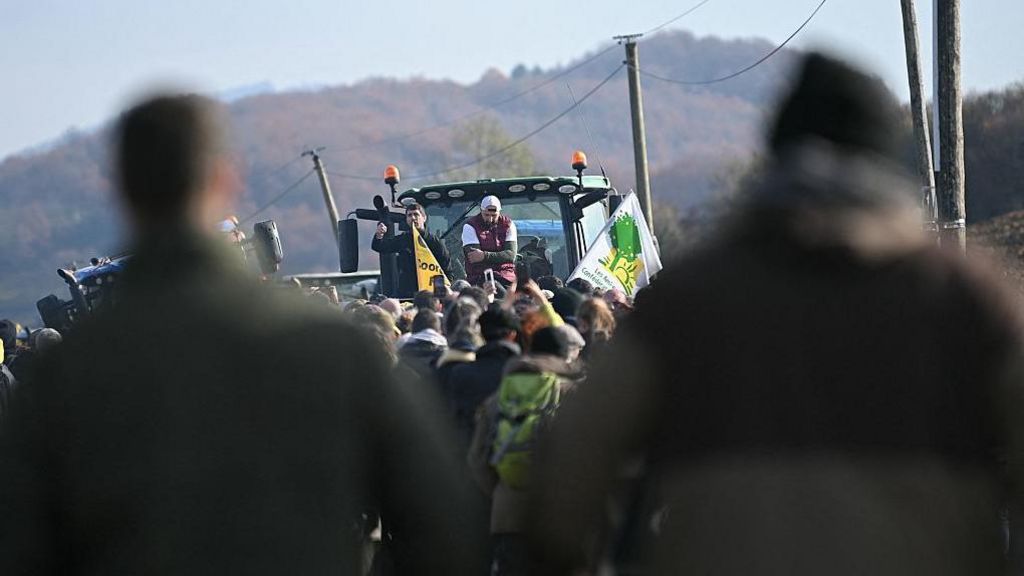
French agricultural regions have descended into turmoil as farmers intensify protests against the government’s controversial approach to containing Lumpy Skin Disease (LSD) outbreaks. The southern Ariège department witnessed violent confrontations on Thursday, with riot police clashing demonstrators attempting to prevent veterinary teams from destroying potentially infected cattle herds.
The unrest has spread across southern France, where agricultural workers have employed disruptive tactics including dumping manure outside government buildings, creating road blockades, and reportedly ransacking offices of environmental organizations in Charente-Maritime. The escalating conflict stems from a fundamental disagreement over disease management strategies.
Lumpy Skin Disease, a highly contagious bovine illness transmitted primarily through insect bites, causes fever, mucous discharge, and distinctive skin nodules. While rarely fatal, the disease severely impacts milk production and renders affected cattle commercially valueless. First detected in Europe approximately a decade ago after spreading from Africa, France confirmed its initial case in the Alps region last June, which notably disrupted the Tour de France cycling event.
The government’s zero-tolerance policy mandates complete herd slaughter when any single animal tests positive for LSD. This approach has drawn fierce opposition from two major farming unions—Confédération Rurale and Confédération Paysanne—who argue for alternative strategies combining selective culling and vaccination programs.
Veterinary experts maintain that comprehensive slaughter remains necessary due to diagnostic limitations. “Current technology cannot distinguish between healthy animals and asymptomatic carriers,” explained Stephanie Philizot, head of the SNGTV veterinarians’ union. “This diagnostic gap necessitates whole-herd interventions to prevent further transmission.”
Since June, France has documented approximately 110 LSD outbreaks, initially concentrated in eastern regions but increasingly emerging in southwestern territories. Agricultural authorities attribute the spread to illegal cattle transportation from infected zones, resulting in the destruction of roughly 3,000 animals to date.
The protests reflect broader anxieties within France’s agricultural sector, which faces mounting pressures from European Union regulations and international competition. Farmers plan to escalate demonstrations during next week’s EU leadership summit in Brussels, highlighting multiple crises affecting wine growers facing declining consumption and poultry farmers combating avian influenza.
Additional concerns center on the impending EU-Mercosur trade agreement with South American nations, which French farmers fear will flood markets with cheaper imports produced under less stringent environmental and sanitary standards.