China’s aerospace sector experienced an unusual day of setbacks on Saturday when both state and private space ventures encountered launch failures within hours of each other, highlighting the inherent risks of space exploration.
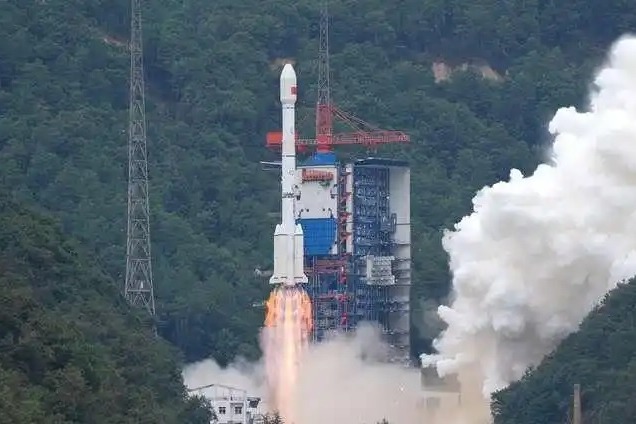
The first incident occurred at 12:55 AM when a Long March 3B carrier rocket launched from the Xichang Satellite Launch Center in Sichuan Province. The mission, intended to deploy the Shijian 32 multirole satellite into orbit, was compromised by a third-stage booster malfunction during flight. China Aerospace Science and Technology Corporation confirmed the anomaly resulted in the satellite failing to reach its designated orbit. An investigation has been initiated to determine the precise cause of the failure.
This malfunction marked the end of an impressive five-year, nine-month success streak for the Long March rocket family, which had completed 296 consecutive successful launches since its last failure in April 2020. The Long March 3B, developed by the China Academy of Launch Vehicle Technology, represents one of China’s most reliable workhorse rockets with 115 missions since its 1996 debut. Capable of delivering payloads up to 5.5 metric tons to geostationary transfer orbit, the rocket has also supported medium-Earth orbit and lunar transfer missions.
In a separate incident at 12:08 PM, Galactic Energy’s Ceres 2 rocket suffered a catastrophic failure during its maiden flight from the Jiuquan Satellite Launch Center in Inner Mongolia. The solid-propellant rocket, designed to deploy six commercial satellites, experienced an anomaly shortly after liftoff and crashed according to spectator footage. The Beijing-based private company has launched its own investigation into the cause.
The Ceres 2 represents China’s growing commercial space sector, featuring three solid-propellant core stages with a liquid-fueled upper stage. Weighing 100 tons, the rocket was designed to deliver up to 1.6 tons to low-Earth orbit at 500 kilometers altitude, with capabilities for both land and sea-based launches emphasizing high carrying efficiency.
Industry experts emphasized that such setbacks, while disappointing, provide valuable learning opportunities. Wang Yanan, Chief Editor of Aerospace Knowledge magazine, noted that established rocket manufacturers must avoid complacency despite past success rates, while commercial ventures must acknowledge the high-risk, high-reward nature of space programs. The true competitive advantage, he suggested, lies in systems engineering capabilities that ensure reliability during high-frequency operations.
Beijing-based industry observer Wu Peixin added that space exploration has never followed a linear progression, with failures serving as unavoidable steps toward progress. China’s space industry sustainability depends on iterative learning through trial and error, with technical data accumulation and industrial chain maturation gradually reducing risks and improving efficiency over time.