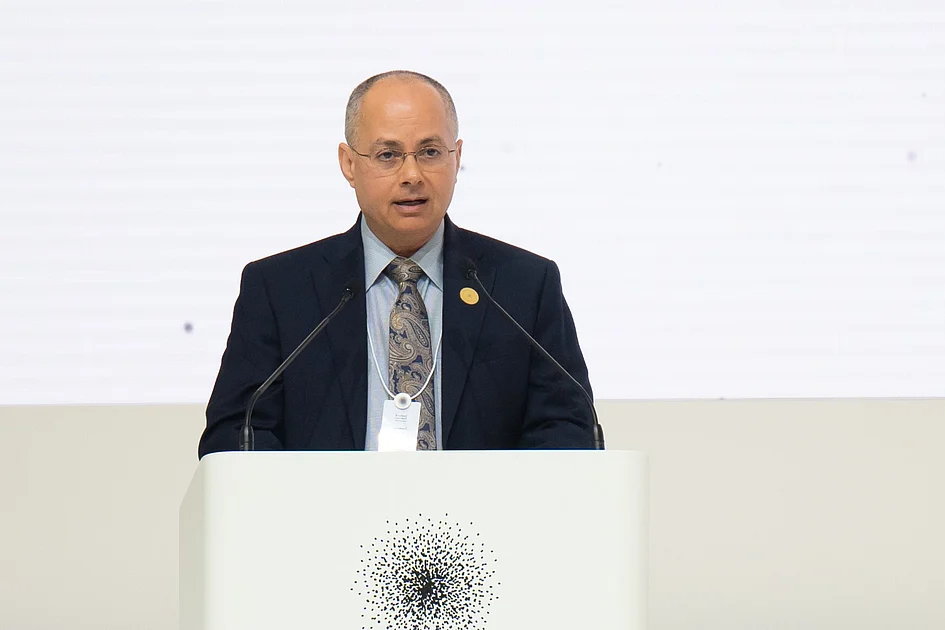
Nobel Prize-winning chemist Omar Yaghi is spearheading revolutionary technology capable of extracting clean drinking water directly from atmospheric air, even in Earth’s most arid regions including the Gulf desert. The Jordanian-born scientist, whose childhood experiences in a refugee camp shaped his understanding of water scarcity, has developed reticular materials that function like molecular sponges to capture atmospheric moisture.
Yaghi’s California-based startup Atoco has announced plans to deploy commercial-scale atmospheric water harvesting units in the second half of 2026, with production capacities reaching thousands of liters daily. The technology utilizes porous crystalline materials featuring internal surface areas equivalent to a football field per gram—engineered to selectively attract and retain water molecules from ambient air.
The breakthrough system operates through minimal temperature variations, releasing captured water with exceptional efficiency even in low-humidity environments. This innovation holds particular significance for the Gulf region, where water stress significantly impacts both communities and industries.
Atoco is currently engaged in advanced discussions with regional companies, anticipating early adoption across GCC nations. The technology promises to support desert agriculture, remote community water needs, and irrigation systems without depleting natural water reserves. Additionally, the system integrates seamlessly with green hydrogen production—requiring approximately nine liters of ultra-pure water per kilogram of hydrogen—by utilizing waste heat from electrolyzers.
The atmospheric harvesting technology also offers sustainable cooling solutions for data centers, using server heat to generate pure make-up water. While not intended to replace desalination, the system provides crucial diversification of water sources and enhanced supply resilience, potentially operating without electrical input in specific configurations.
Yaghi, recipient of the 2025 Nobel Prize in Chemistry for “discoveries that have conferred the greatest benefit to humankind,” emphasizes that the recognition has intensified his commitment to translating scientific breakthroughs into societal benefits. Reflecting on his journey from discovering molecular diagrams in a library to Nobel recognition, he advocates maintaining curiosity through uncertainty as the pathway to transformative innovation.