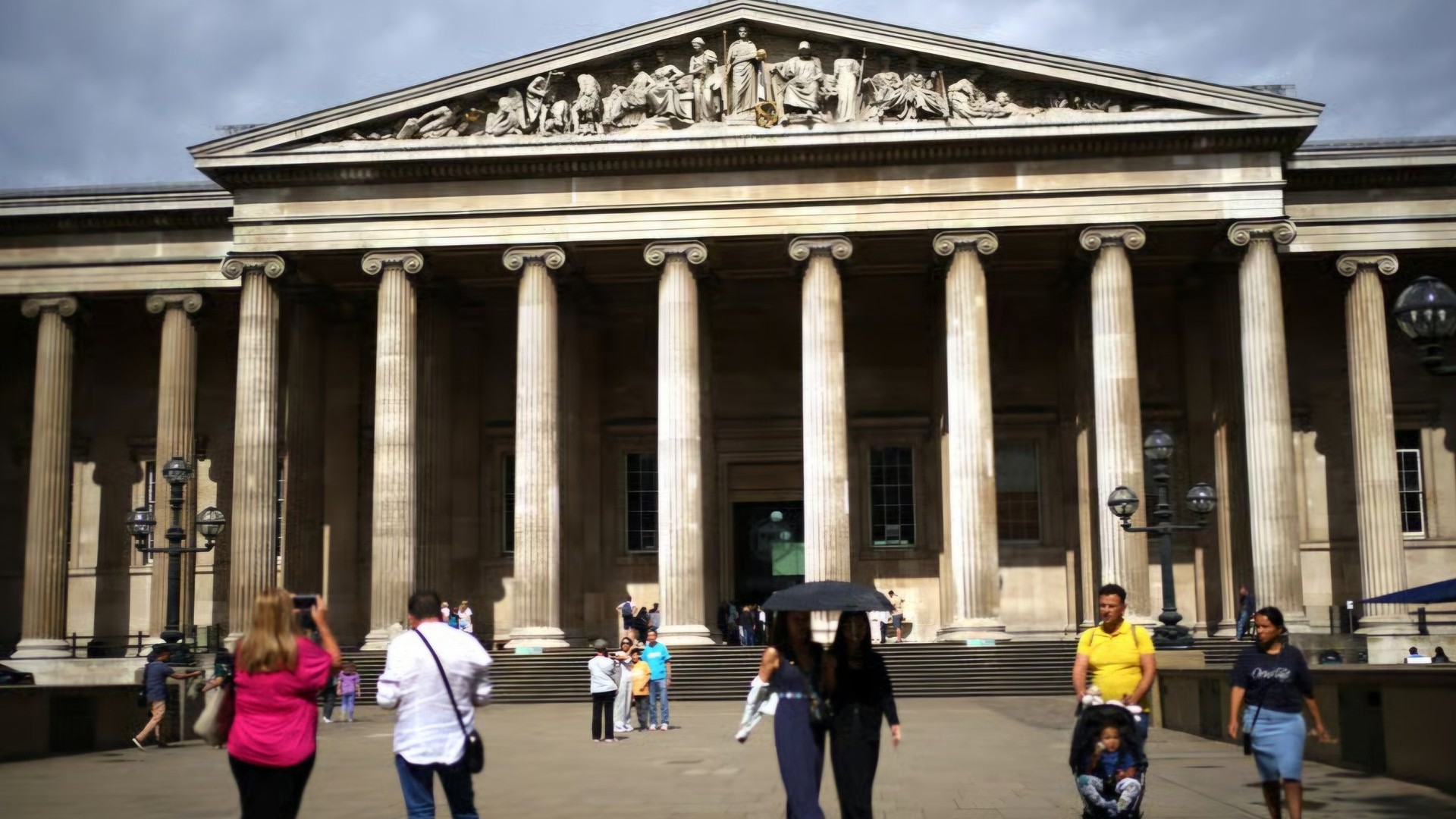
The British Museum has ignited a firestorm of academic criticism after eliminating all references to Palestine within its ancient Middle Eastern galleries. This controversial decision, implemented following pressure from the pro-Israel advocacy group UK Lawyers for Israel (UKLFI), has been denounced by scholars as a politically-motivated assault on Palestinian cultural heritage.
The institution altered exhibit labels dating from 1700–1500BC, replacing the term ‘Palestine’ with ‘Canaan’ and modifying descriptions of the Hyksos people from ‘Palestinian descent’ to ‘Canaanite descent’. Museum representatives justified the changes by asserting the term Palestine lacked historical relevance for that specific chronological context, claiming it only became appropriate for the southern Levant region in the later second millennium BC.
This rationale has been vehemently contested by leading academics. Marchella Ward, a Classical Studies lecturer at the UK’s Open University, stated, ‘I use the term ancient Palestine frequently in my own research and will continue to do so.’ She characterized claims of the term’s illegitimacy as a ‘lie’ facilitating ‘the erasure of Palestinians.’
The incident represents merely the latest in a series of successful campaigns by UKLFI targeting British public institutions. Recent targets include Encyclopaedia Britannica, which amended content in its children’s edition, and London’s Chelsea and Westminster Hospital, which removed artwork created by Gazan schoolchildren. The Open University similarly acquiesced to demands to purge ‘ancient Palestine’ from future educational materials.
According to data compiled by the European Legal Support Centre (ELSC), UKLFI has been involved in 128 of approximately 900 documented cases of anti-Palestinian repression in the UK between 2019-2025. ELSC Director Giovanni Fassina described the pattern as ‘not surprising,’ noting institutions frequently comply with the group’s ‘misleading legal arguments’ despite their questionable foundation.
The controversy intersects with broader concerns about cultural destruction in Gaza, where Israeli forces have damaged over 316 archaeological sites according to reports. Scholars argue that the revision of historical narratives in Western institutions complements physical destruction in conflict zones, collectively undermining Palestinian historical claims.