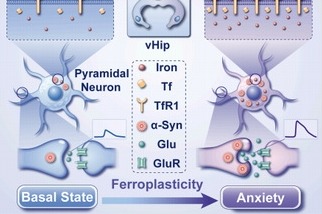
A groundbreaking study led by South China University of Technology has revealed a previously unknown neurological mechanism linking social isolation to anxiety disorders. Published in the prestigious journal Cell Metabolism, the research demonstrates how prolonged solitude triggers iron accumulation in the brain’s emotional regulation centers, creating a biological pathway for social anxiety development.
The research team, under the direction of Associate Professor Wang Zhuo in collaboration with Zhejiang University and Southern Medical University, discovered that isolated mice exhibited abnormal iron elevation specifically in the ventral hippocampus region. Contrary to iron’s traditional perception as a neural nutrient, the study reveals its dual nature under psychological stress, where excessive amounts trigger destructive neurological processes.
Professor Wang describes the mechanism as ‘ferroplasticity’—iron-mediated, experience-dependent neuroplasticity that directly connects cerebral iron metabolism disorders to affective conditions. The excessive iron activates alpha-synuclein proteins, inducing abnormal neuronal hyperexcitability that Wang compares to an electrical short circuit constantly transmitting anxiety signals throughout the nervous system.
The most promising aspect of the discovery lies in its therapeutic implications. Through targeted nasal administration addressing either iron or alpha-synuclein molecules, researchers successfully reversed anxiety behaviors in mice within two weeks—significantly faster than the four weeks required for traditional resocialization approaches.
This breakthrough suggests potential noninvasive interventions for over one billion people worldwide affected by isolation-related psychological issues. The research team is now advancing human safety studies and dosage optimization for nasal spray formulations while developing noninvasive imaging techniques to detect ventral hippocampal iron deposition.
The World Health Organization has recognized social isolation as a major global health threat, making this discovery particularly timely. The findings offer hope for vulnerable populations including isolated elderly individuals, remote workers, postoperative patients, and socially avoidant adolescents who might benefit from precisely targeted, non-pharmaceutical anxiety interventions.