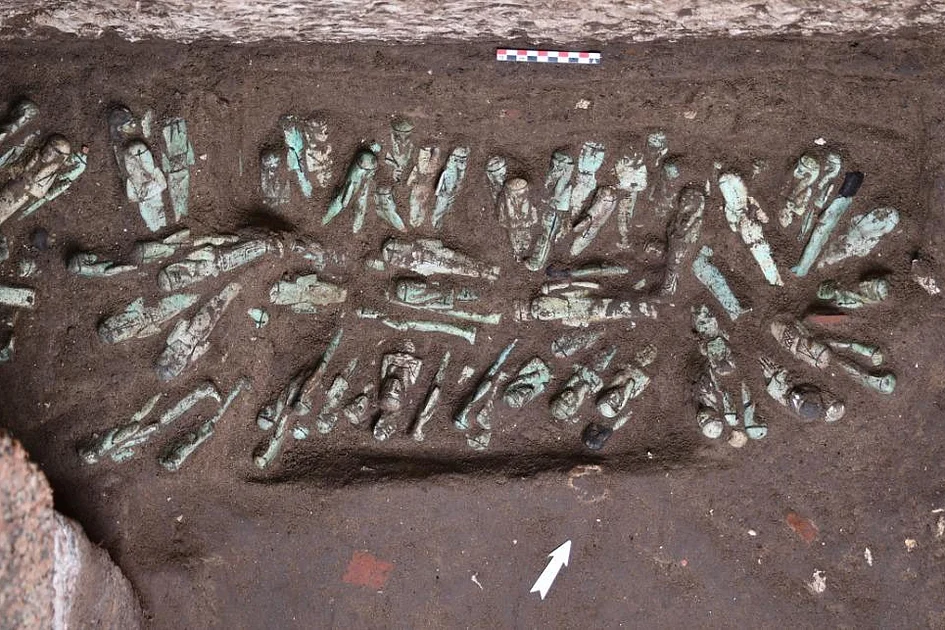
In a groundbreaking archaeological breakthrough, French Egyptologists have unearthed a remarkable collection of 225 ancient funerary figurines within a royal tomb at the Tanis necropolis in Egypt’s Nile Delta. The discovery, made by a team led by renowned Egyptologist Frédéric Payraudeau in early October, represents the first such find in the Tanis burial grounds since 1946.
The meticulously arranged green figurines, known as ushabti, were designed to serve the deceased in the afterlife. What makes this discovery particularly extraordinary is that more than half of these ancient artifacts depict female figures—a rare occurrence in Egyptian archaeology. The figurines were found carefully positioned in a star formation around a trapezoidal pit with additional horizontal rows at the bottom.
The excavation team worked tirelessly for ten days to carefully extract all 225 artifacts, even continuing through the night with special lighting to preserve the integrity of the discovery. The royal symbols inscribed on the figurines have finally resolved a long-standing archaeological mystery, confirming the tomb’s occupant as Pharaoh Shoshenq III, who ruled Egypt from approximately 830 to 791 BC.
Egyptian authorities, including Dr. Mohamed Ismail Khaled, Secretary General of the Supreme Council of Archaeology, have hailed the discovery as a decisive breakthrough that confirms the Tanis archaeological site still holds numerous undiscovered secrets. The findings also reveal previously unknown patterns within the burial chamber, providing valuable new insights into ancient Egyptian burial practices during this historical period.