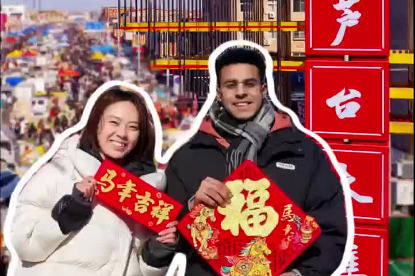
In the Ninghe district of Tianjin, the historic Lutai Fair—a cornerstone of northern Chinese cultural heritage for approximately 460 years—continues to thrive as a vibrant hub of tradition and community exchange. This year’s event attracted widespread attention, including Egyptian national Ahmed Mohamed Saleh, who embarked on an immersive journey through the fair’s bustling lanes and rich cultural offerings.
The fairgrounds featured hundreds of stalls showcasing local culinary specialties, traditional Spring Festival decorations, and regional agricultural products. Visitors were enveloped in a sensory experience characterized by the aromatic scents of local delicacies, the dynamic calls of vendors, and the lively social interactions emblematic of China’s rural market culture.
A notable highlight was the innovative 100-yuan (approximately $14) New Year shopping challenge, where participants curated selections of food and festive items within a strict budget. Ahmed navigated the marketplace with enthusiasm, acquiring strawberries, spicy crayfish, pickled cabbage, and traditional Spring Festival couplets while sampling flavors and discovering cultural artifacts.
Beyond commercial activities, the fair served as a platform for preserving intangible cultural heritage through demonstrations of traditional craftsmanship and local skills. The event also hosted a competitive village chef championship where culinary experts from surrounding towns prepared distinctive northern Chinese dishes.
This convergence of historical preservation and contemporary engagement illustrates how traditional rural markets maintain relevance in modern society. The Lutai Fair functions as both a cultural exchange conduit and a window into northern China’s agricultural heritage, drawing urban dwellers and international visitors alike to experience its unique blend of tradition and community spirit.