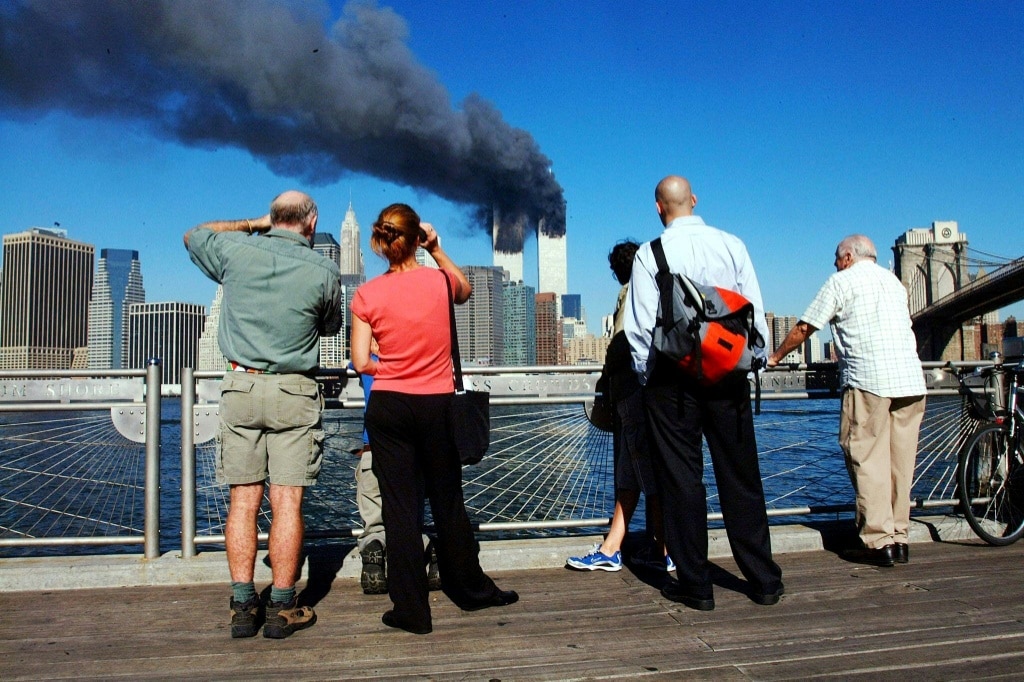
A quarter-century has passed since the catastrophic September 11, 2001 attacks that killed nearly 3,000 people across New York, Washington D.C., and Pennsylvania, but a growing network of educators, volunteer groups, and charitable organizations are racing to preserve the legacy of the tragedy for a generation of American young people born long after the planes struck. Today’s teenagers and younger children have no personal memory of the deadliest attack on U.S. soil, and systemic gaps in national education standards have left many of them with incomplete or fragmented knowledge of the day that reshaped modern U.S. history.
Unlike core historical events that are embedded in standardized national curricula, there is no federally mandated framework for teaching 9/11 across the United States. Only a small number of U.S. states require 9/11 education, resulting in an uneven patchwork of instruction that varies widely from district to district. To close this gap, independent volunteers, frontline teachers, and nonprofits have stepped forward to lead targeted educational initiatives that bring the tragedy to life far beyond textbook pages.
One of the most prominent efforts is centered at Wantagh High School, a Long Island institution whose local community lost 12 residents in the 2001 attacks. For years, school leaders noted that students learned about 9/11 the same way they studied World War II or the 1941 Pearl Harbor attack: as a distant historical event that occurred before their lifetimes. Wantagh High Principal Paul Guzzone explains that classroom lectures and online videos can never match the impact of a first-hand visit to the site where the Twin Towers once stood. “You can’t compare the experience of visiting the site with just hearing stories in the classroom or seeing videos online,” the 41-year-old principal said.
That hands-on impact resonated deeply with 17-year-old Max Avena, who visited the National 9/11 Memorial and Museum on a school trip organized through the initiative. Though Avena grew up hearing stories from close family friends who served as first responders during the attack, he said the on-site visit left him speechless and fundamentally changed his understanding of the tragedy. “You never really realize how real it is, and how the feeling is, until you’re on site in the memorial,” he told reporters.
To cover the cost of annual student trips to the downtown Manhattan memorial, the Gary Sinise Foundation — a charitable organization best known for its work supporting veterans and first responders — stepped in to fund the visits, later expanding its support to include on-campus memorial projects and expanded educational programming. The foundation already ran a well-regarded World War II education initiative that brought Wantagh students to a New Orleans museum, so expanding to 9/11 education was a natural next step.
James Ravella, the foundation’s executive vice president, noted that even many new teachers graduating from U.S. colleges today have no personal memory of the 9/11 attacks, making structured outside support even more critical. “It just kind of makes it important that we tell this story and educate as many people as we can, while we can, and while [survivors and first responders] are here,” Ravella said. Guzzone echoed this concern, adding that first-hand, lived memory of the attacks fades a little more each year. Beyond its Wantagh partnership, the foundation now runs professional development programs for teachers in collaboration with the National 9/11 Memorial and Museum, and organizes student trips to both the Pentagon attack site and the Flight 93 National Memorial in Shanksville, Pennsylvania, where passengers and crew overtook hijackers en route to the U.S. Capitol, crashing the plane and killing all on board.
For younger elementary school students, organizers have developed age-appropriate digital educational resources to introduce core concepts of the tragedy, sacrifice, and memory. One example is “OOPA’s World of Words,” an online video series created in partnership with the National Fallen Firefighters Foundation (NFFF) that teaches basic vocabulary tied to 9/11 — including words like “anniversary,” “emergency,” “hero,” “memory,” and “service” — to children as young as five. The five-part series features first-hand accounts from people touched by the attacks, including an 11-year-old girl whose grandfather was a first responder at the Pentagon.
Series creator Rupa Mehta, a teacher who plays the titular character OOPA, said she was inspired to launch the project after seeing a young child interviewed on the news on a 9/11 anniversary. The girl expressed deep sadness that her school did not teach about the attacks, saying she felt her family’s legacy of sacrifice had been ignored. “It was in that moment… I thought that we could lend a hand and be a powerful potential partner,” Mehta said. NFFF chief executive Victor Stagnaro noted that the digital resource will remain accessible “for generations to come,” allowing 9/11 first responders to share their stories with their grandchildren while they are still able to do so.