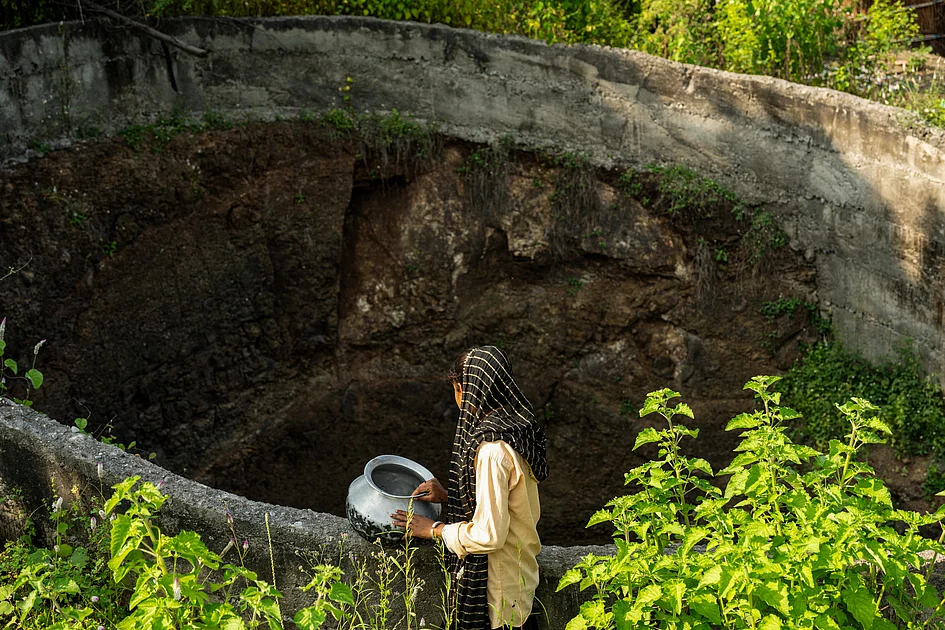
In the drought-stricken regions of Maharashtra, India, the harsh realities of climate change are reshaping the lives of young girls. As wells dry up and rainfall becomes increasingly unpredictable, the burden of water collection falls heavily on their shoulders. Seventeen-year-old Ramati Mangla is one of many girls who must walk several kilometres each morning to fetch water, often missing school in the process. ‘I have kept my books,’ she laments, ‘but what if I never get a chance to go back?’
With men migrating to nearby cities for work, girls like Mangla are left to shoulder the responsibility of water collection, a task that consumes hours each day and leaves little time for education. Local officials estimate that nearly two million people in Nashik and Nandurbar districts face daily water shortages. This crisis is not unique to Maharashtra; it mirrors a broader trend across India’s rural heartlands, where climate-related disruptions are pushing millions of girls out of classrooms.
A 2021 UNESCO report highlighted the global impact of climate change on education, warning that millions of girls worldwide could be forced to leave school. In India, this pattern is already evident, with teachers reporting a sharp decline in girls’ attendance, particularly during dry months. Struggling to survive, many families see no option but to keep their daughters home or marry them early.
The UN children’s fund has noted that children in drought-prone areas, burdened with family responsibilities like water collection, struggle to attend school regularly. For Mangla and countless other girls, climate change has turned the simple act of fetching water into a stark choice between survival and education.
Mangla’s story is part of a photography series by Shefali Rafiq, featured in the 2025 Marai Photo Grant. This award, organised by Agence France-Presse, honours Shah Marai, the former photo chief at AFP’s Kabul bureau, who was killed in a suicide attack in 2018. The 2025 theme, ‘climate change,’ highlights its profound impact on daily life and communities, as seen through the lens of young South Asian photographers.