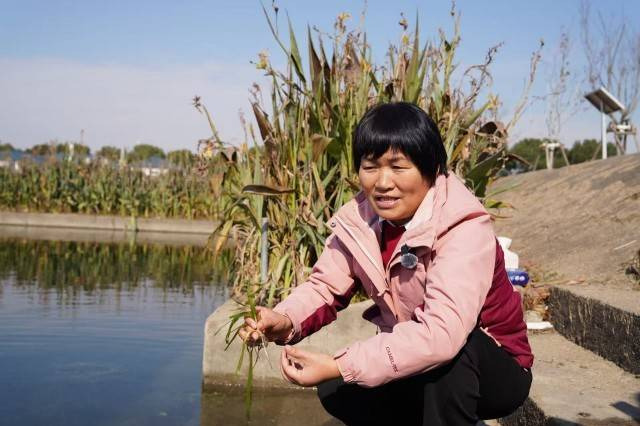
SHANGHAI – Researchers at Shanghai Ocean University have unveiled a groundbreaking ecological approach to water purification that merges ancient Chinese medical philosophy with modern environmental science. The innovative methodology, developed under the guidance of Professor Wang Liqing, applies the fundamental diagnostic principles of Traditional Chinese Medicine – observation, listening, smelling, inquiry, and palpation – to assess and rehabilitate compromised aquatic ecosystems.
The comprehensive treatment protocol initiates with meticulous water quality analysis through both visual inspection and advanced instrumental monitoring. Subsequent phases involve examining water circulation dynamics and investigating historical pollution sources alongside environmental transformations. These diagnostic insights inform the creation of customized rehabilitation strategies tailored to each unique water body.
“Our primary intervention involves isolating pollution sources to prevent additional contamination,” Professor Wang explained. “We then perform precise ‘surgical’ modifications to underwater topography while establishing specialized habitats for carefully selected aquatic flora and fauna.”
The research team conceptualizes water ecosystems as intricate networks where material conversion, energy transfer, and information exchange form self-regulating systems with interconnected components. This holistic perspective enables implementation of complete ecological solutions rather than addressing isolated symptoms.
The treatment methodology employs diverse biological agents strategically deployed according to water depth. In deeper aquatic zones, fish populations serve as natural regulators of algae while absorbing surplus nutrients. Shallower regions receive submerged vegetation, particularly a specially engineered strain of vallisneria that demonstrates exceptional pollutant absorption capabilities.
At their Qingpu district research facility, the team has perfected plant cultivation techniques through two decades of selective breeding. Their enhanced vallisneria variant achieves two annual harvests while exhibiting superior functional performance. The researchers have additionally developed specialized equipment including aquatic plant wrapping machinery and automated collection vessels that enable low-disturbance, high-efficiency planting and maintenance operations.
While the ecological approach appears fundamentally simple, Professor Wang emphasizes its underlying complexity lies in precision implementation. “Each aquatic environment demands carefully calibrated, location-specific interventions to maintain ecological equilibrium,” she noted.
The system’s effectiveness finds demonstration at Jinhai Lake in Fengxian district, where implemented measures have maintained remarkable stability since 2011. Water transparency consistently reaches two meters with quality meeting Grade II or III standards, while the site now purifies approximately 100,000 metric tons daily.
In Zhujiajiao Water Town, the establishment of ecological buffer zones has improved water transparency from under half a meter to exceeding 1.5 meters. The approach achieves significant cost efficiency, reducing treatment expenses from 0.2-0.5 yuan per ton through conventional methods to approximately 0.04 yuan per ton.
“We facilitate natural transformation processes rather than merely extracting pollutants,” Professor Wang elaborated. “Converting dissolved nutrients into harvestable biomass establishes a sustainable cycle where aquatic vegetation serves as fish nourishment or organic fertilizer.”
The ecological methodology has been deployed across more than 700 projects throughout 23 Chinese provinces and municipalities, treating approximately 90 square kilometers of water area – equivalent to 15 West Lakes. “Our ultimate vision transcends water treatment alone,” Professor Wang concluded. “We aspire to create self-sustaining ecosystems that coexist harmoniously with human activity while delivering enduring environmental and economic benefits.”