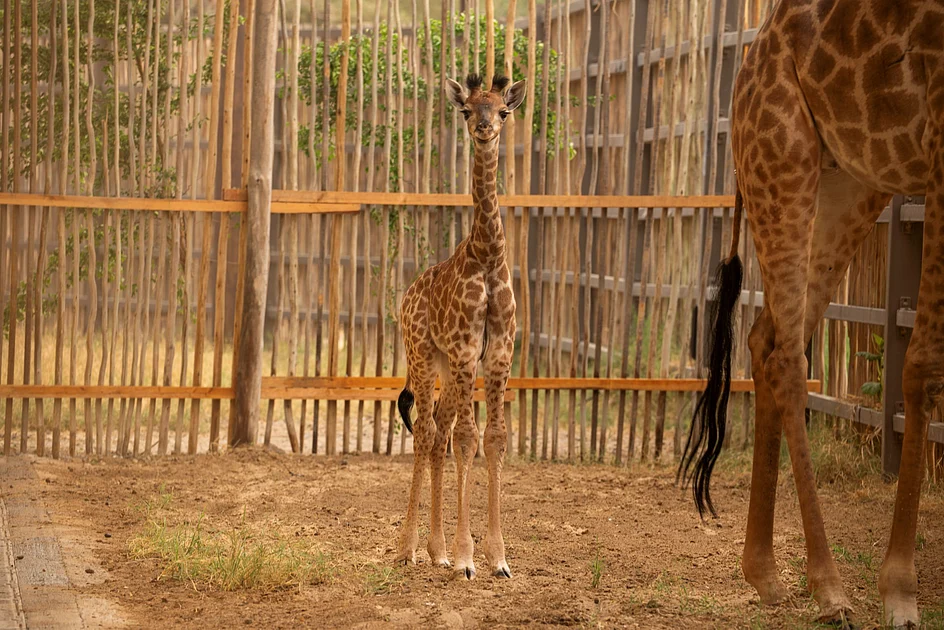
Dubai Safari Park has announced a significant conservation achievement with the successful birth of a Southern giraffe calf, marking a pivotal moment in its endangered species breeding initiative. The newborn female, named Zuri, arrived several months ago and represents hope for a species currently classified as Vulnerable by the International Union for Conservation of Nature (IUCN), with only 45,000-50,000 remaining in their natural habitats.
The calf has demonstrated excellent health and developmental progress under the supervision of the park’s expert zoologists. Shortly after birth, Zuri achieved critical milestones including standing, walking, and nursing independently. Weighing 44kg at birth, the young giraffe has since begun supplementing her diet with hay, lettuce, and browse while maintaining nursing behaviors. Park visitors have observed her playful engagement with the environment, particularly her enjoyment of the misting system which provides cooling relief in Dubai’s climate.
Muna Alhajeri, Director of Dubai Safari Park, emphasized the importance of this birth: ‘The arrival of our Southern giraffe calf perfectly inaugurates our seventh season, embodying our sustained commitment to wildlife conservation. Our breeding program serves as a cornerstone in protecting vulnerable species while raising awareness about the urgent need for global conservation efforts.’
The park’s current season, launched on October 14, 2025, spans 119 hectares and integrates educational programming with entertainment experiences to highlight conservation priorities. Notably, a portion of all admission revenues directly supports wildlife rescue operations, animal care, and research initiatives, allowing visitors to contribute actively to preservation efforts.
This birth occurs within a broader context of regional conservation successes, including Al Ain Zoo’s report of 390 animal births in 2025, with over 250 from endangered species. Dubai Safari Park’s breeding program operates through collaborative partnerships with both local and international wildlife institutions to maximize impact for vulnerable species populations.