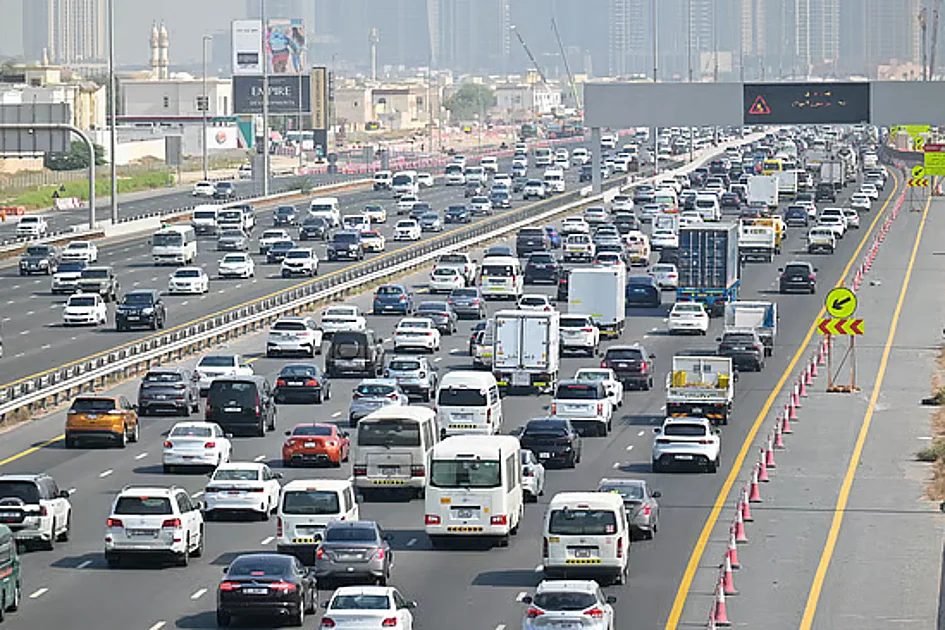
Dubai motorists endured significantly increased traffic delays throughout 2025, with commuters losing approximately 45 hours to congestion according to the recently released Inrix Global Traffic Report. This represents a substantial increase from the previous year’s figures of 35 hours lost, highlighting growing transportation challenges across the emirates.
The traffic congestion escalation coincides with notable population growth, with the UAE’s resident count expanding by two million over the past five years to reach 11.48 million as of November 2025. This demographic surge, coupled with increasing vehicle numbers, has placed unprecedented pressure on the nation’s road infrastructure.
In response to these challenges, UAE authorities have unveiled an ambitious Dh170-billion transportation infrastructure package scheduled for implementation by 2030. Suhail Al Mazrouei, Minister of Energy and Infrastructure, announced during the UAE Government Annual Meeting that the comprehensive plan aims to enhance federal road efficiency by 73% through strategic expansions and upgrades.
The infrastructure development strategy includes significant lane additions, with federal roads expanding from 19 to 33 lanes in each direction. Specific projects involve widening Etihad Road by six lanes (three per direction), increasing its capacity by 60%, while Emirates Road will expand to ten lanes throughout its length, boosting capacity by 65% and reducing travel time by 45%. Sheikh Mohammed bin Zayed Road will similarly be widened to ten lanes, enhancing capacity by 45%.
Additionally, transportation authorities are conducting feasibility studies for a proposed fourth federal highway spanning 120 kilometers with twelve lanes, potentially handling up to 360,000 daily trips.
The traffic impact varied across emirates, with Abu Dhabi motorists losing 29 hours to congestion, Umm Al Quwain 28 hours, Al Ain 17 hours, and Fujairah 8 hours. Dubai’s substantial investment in transportation infrastructure over two decades, totaling Dh175 billion, has delivered significant projects including the Dubai Metro, Dubai Tram, extensive road networks, cycling tracks, and pedestrian facilities. A McKinsey & Company study indicated these investments have yielded Dh319 billion in savings through reduced fuel consumption and time efficiency.
Despite these efforts, traffic speeds have continued to decline, with peak commute speeds in Dubai dropping from 33 mph in 2023 to 29 mph in 2025, while last-mile downtown speeds decreased to 21 mph during morning commutes.
Globally, Istanbul maintained its position as the world’s most congested urban area for the second consecutive year, with drivers losing 118 hours to delays—a 12% increase from 2024. Other severely affected cities included Mexico City, Chicago, New York, Philadelphia, Cape Town, London, Paris, Jakarta, and Los Angeles.