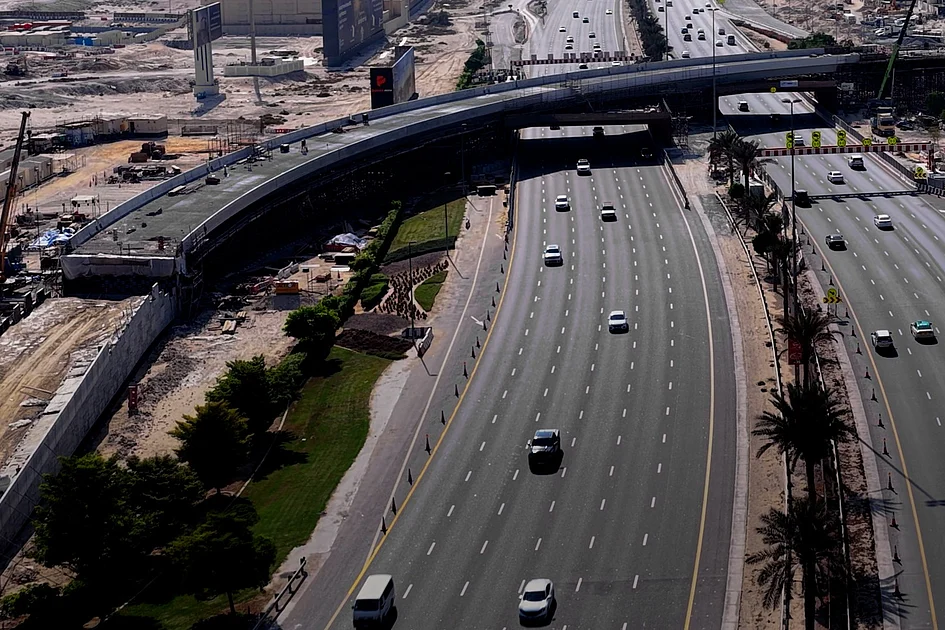
Dubai’s Roads and Transport Authority (RTA) has announced significant progress on the Oud Metha Road and Al Asayel Street development project, with 60% of construction completed as of January 2026. This critical infrastructure initiative forms part of the broader Sheikh Rashid Corridor Development Project aimed at enhancing urban connectivity across multiple districts.
The comprehensive development encompasses four major intersections featuring an extensive network of bridges spanning 4.3 kilometers and roads extending 14 kilometers. Current construction milestones reveal 70% completion of bridges facilitating traffic flow from Al Asayel Street to Al Khail Road northbound toward Business Bay Crossing, with anticipated opening scheduled for the first quarter of 2026.
Key infrastructure enhancements include a tunnel serving traffic from Dubai-Al Ain Road toward Al Wasl Club Street, which has reached approximately 60% completion. Remaining road widening operations and associated bridge constructions are progressing toward a third-quarter 2026 operational deadline.
The project’s four upgraded intersections represent engineering marvels:
1. Oud Metha Road-Sheikh Rashid Road Intersection: Enhanced with additional left-turn slip ramps and expanded right-turn lanes, increasing capacity to 4,000 vehicles hourly
2. Oud Metha Road-Al Asayel Street Intersection: Features two new bridges connecting Al Asayel Street to Al Khail Road via Al Wasl Club Street, with capacities reaching 3,600 vehicles hourly
3. Al Wasl Club Street-Al Khail Road Intersection: Includes a new two-lane bridge and upgraded access roads with dedicated parking solutions
4. Zabeel Palace Street Intersection: Incorporates a single-lane vehicle tunnel and expanded bridge capacity from 2,200 to 3,300 vehicles hourly
Upon full completion, the project will serve over 420,000 residents across Zabeel, Al Jaddaf, Oud Metha, Umm Hurair, Latifa Hospital, and Al Wasl Club districts. Transportation efficiency will dramatically improve, with Oud Metha Road capacity increasing by 50% to 15,600 vehicles hourly and journey times reduced from 20 minutes to just 5 minutes—representing a 75% improvement in traffic flow.