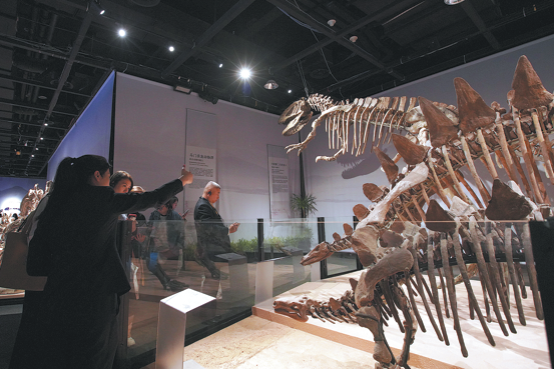
The dream of resurrecting dinosaurs, once confined to the realms of science fiction, may become a reality within the next 100 to 200 years, thanks to advancements in artificial intelligence (AI) and genetic technologies. This groundbreaking perspective was shared by leading paleontologists at the international symposium ‘China’s Dinosaurs: From Research to Science Education,’ held in Shanghai from October 28 to 31. The event gathered over 20 top international experts to discuss the future of paleontology and China’s growing influence in the field. While the idea of dinosaur revival sparked lively debate, the symposium also highlighted China’s pivotal role in global dinosaur research, driven by its rich fossil discoveries and innovative public science initiatives. The ongoing ‘China Dinosaur World’ exhibition in Shanghai, featuring 118 representative dinosaur specimens from 12 national institutions, has drawn international acclaim. Experts like Xu Xing, a prominent Chinese paleontologist, emphasized that while current technology cannot resurrect dinosaurs using DNA, new methods involving bone proteins and AI offer promising avenues. British paleontologist Emily Rayfield highlighted AI’s transformative potential in understanding dinosaur biology. However, ethical considerations remain a significant hurdle. The symposium also underscored China’s contributions to paleontology, with nearly one-third of known dinosaur species discovered in the country. The event concluded with a focus on bridging scientific research with public education, as exemplified by the Shanghai exhibition, which has attracted nearly 400,000 visitors and garnered international interest for a global tour.