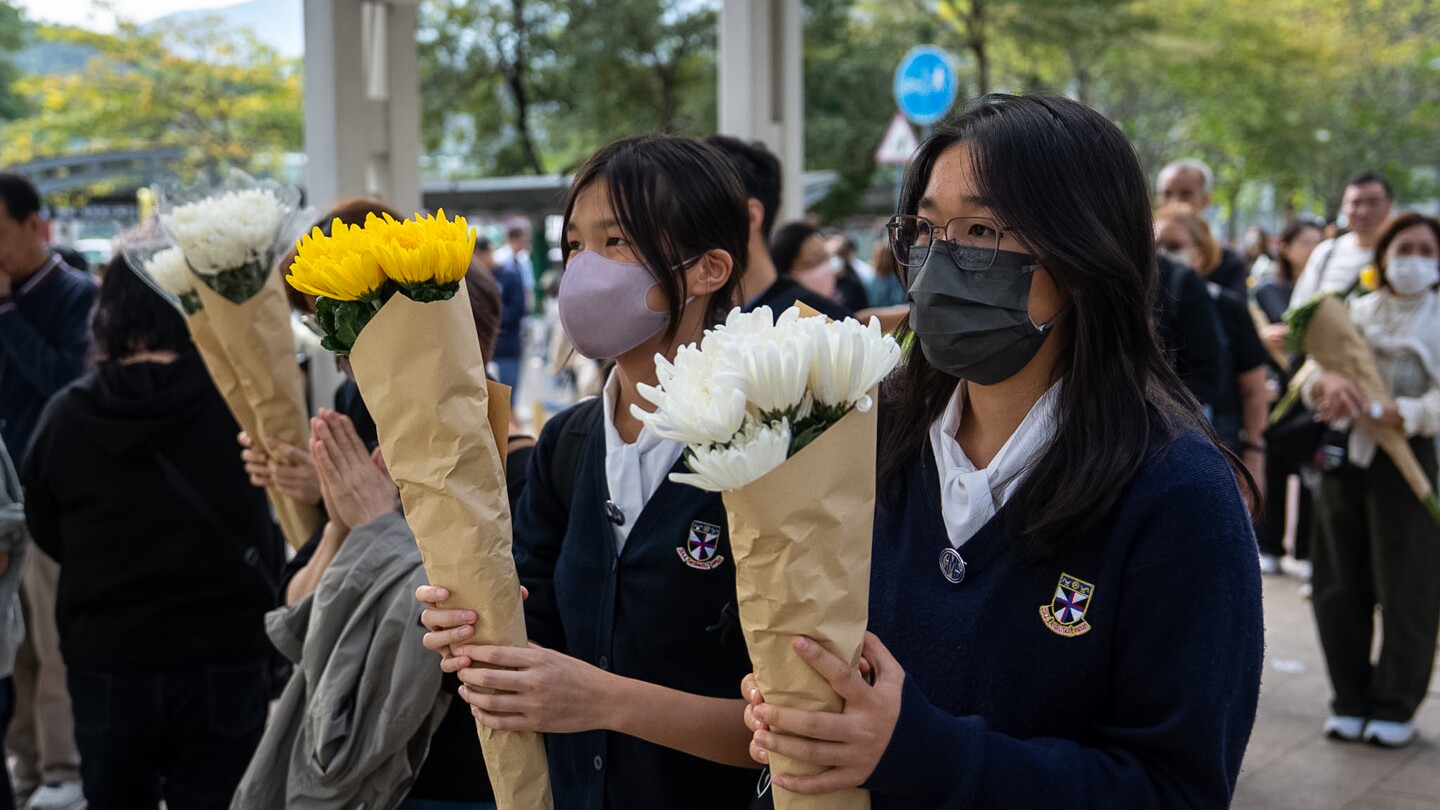
HONG KONG — A catastrophic inferno that ravaged the Wang Fuk Court residential complex in Tai Po has left 146 confirmed fatalities while approximately 100 individuals remain unaccounted for, marking one of Hong Kong’s deadliest urban disasters in recent history. The tragedy has triggered an unprecedented humanitarian response with donations surpassing HK$900 million (US$115 million), complemented by an additional HK$300 million in government emergency funding for victim support.
The seven-tower complex, housing approximately 4,600 residents, became engulfed in flames last Wednesday afternoon, with firefighting operations continuing until Friday morning before complete containment. Preliminary investigations reveal the buildings were undergoing external renovations shrouded in highly flammable materials—bamboo scaffolding draped with nylon netting and polystyrene panel window coverings—creating ideal conditions for rapid fire propagation.
Despite the massive outpouring of solidarity evidenced by endless queues of mourners at makeshift memorials, the government faces mounting scrutiny over its regulatory oversight. The Labor Department confirmed 16 safety inspections since July 2024, with multiple written warnings issued to contractors regarding fire code compliance. Yet residents had reportedly voiced concerns about the netting installations for nearly a year prior to the disaster.
In a concerning development, Hong Kong’s national security apparatus has moved aggressively to suppress criticism, arresting at least 11 individuals including construction company executives and three civilians—among them a volunteer aid organizer and petition coordinator. The Office for Safeguarding National Security condemned what it termed “evil schemes” exploiting the tragedy, reflecting the city’s increasingly restrictive environment for dissent since the 2019 pro-democracy protests.
Survivor relocation efforts continue with 683 residents placed in temporary hotel accommodations and 1,144 moved to transitional housing units, while two emergency shelters remain operational. The government has pledged comprehensive support including funeral subsidies and long-term housing solutions, even as many question whether officials themselves should bear accountability for regulatory failures that contributed to the scale of the catastrophe.