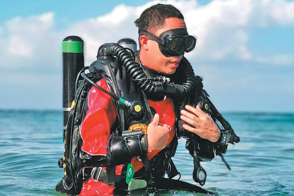
For underwater archaeologist Tseung Pak-long, the ocean’s surface tranquility often masks the volatile conditions that determine the success or failure of his missions. Recently traveling nearly eight hours from Hong Kong to Pingtan Island in Fujian province, Tseung arrived to assist with specialized diving training despite an approaching typhoon threatening to disrupt operations.
The delicate dance between archaeology and meteorology becomes most apparent during typhoon season, which spans May through November with peak intensity from July to September. Paradoxically, this period of heightened weather risk offers the most favorable underwater conditions for archaeological work. ‘Temperature and seabed conditions reach their optimal state during these months,’ Tseung explained, highlighting the profession’s inherent contradictions.
As Typhoon Wipha prompted Hong Kong’s highest hurricane warning, Tseung maintained hope that Fujian’s distance from the storm’s eye might spare their operations. This optimism proved short-lived as powerful gusts greeted his arrival, signaling the challenging conditions ahead.
The following day brought deceptive sunshine, but Tseung’s experience told a different story. ‘Favorable conditions for underwater work aren’t about surface weather,’ he clarified. ‘Everything depends on current intensity and subaquatic visibility.’
Underwater archaeology operates under stringent safety protocols that prioritize diver security above all discoveries. The discipline mandates buddy systems, strict time limitations, defined operational ranges, and precise workflows. Tseung gestured toward the seemingly calm sea, noting its appearance belied the turbulent currents churning beneath—the aftermath of the passing typhoon creating dangerous and murky conditions.
Accustomed to weather-related disappointments, Tseung philosophically compared underwater excavation to ‘opening a mystery box’ where even reaching a shipwreck site doesn’t guarantee significant findings. This unpredictability makes every successful dive particularly valuable.
The expedition’s fate was sealed by evening when rough seas forced all vessels to designated safe zones, canceling the next day’s planned operations. Accepting nature’s authority with equanimity, Tseung reflected that being at mercy of the elements simply represents the norm in his profession.