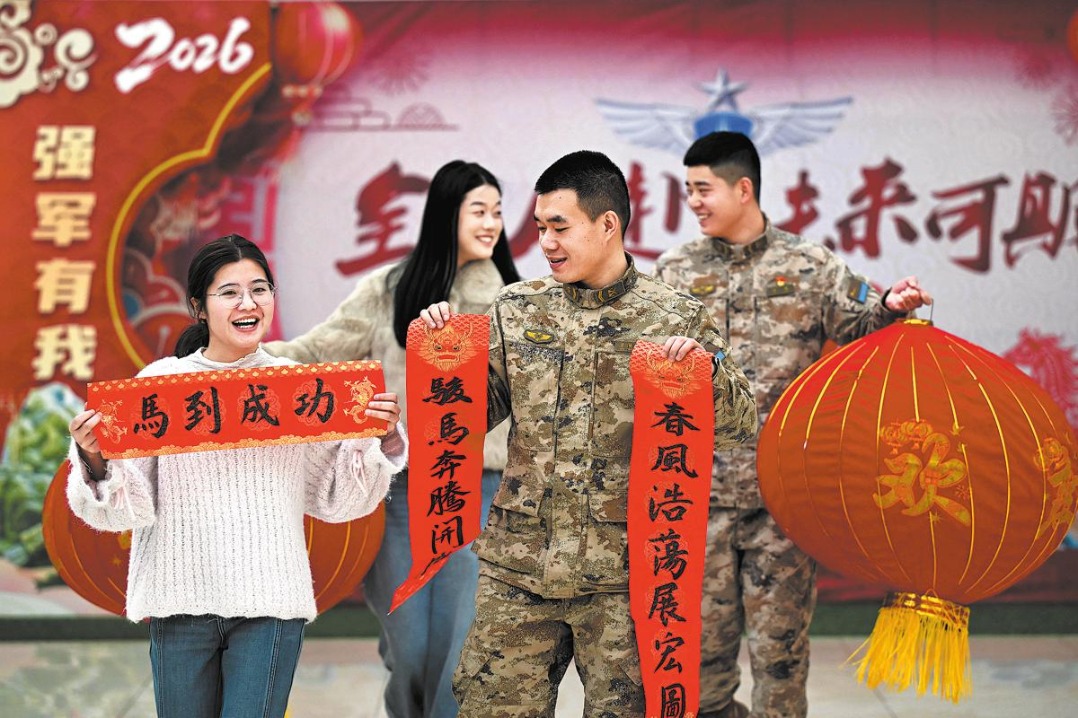
In a remarkable testament to marital devotion, Huang Xin undertook an arduous 5,000-kilometer journey during the Spring Festival period to reunite with her husband stationed at a remote military installation. Traveling from Bama in the Guangxi Zhuang Autonomous Region to a high-altitude radar outpost in the Karakoram Mountains of Xinjiang, Huang’s pilgrimage symbolizes the extraordinary sacrifices made by military families across China.
Sergeant Meng Mingtao, serving with the People’s Liberation Army Air Force under the Western Theater Command, has maintained his year-long marriage primarily through digital connectivity, with video calls bridging the physical separation imposed by his patriotic duties. Despite their formal union, the couple had been unable to conduct proper wedding ceremonies due to Meng’s operational commitments in one of China’s most challenging terrains.
“My affection for him translates directly into support for his mission,” Huang stated, reflecting on her motivation for undertaking the demanding trek. “Regardless of the geographical obstacles, I felt compelled to experience firsthand the environment that commands his dedication and loyalty.”
The emotional reunion occurred at an elevation exceeding 4,000 meters, where temperatures regularly plummet to -30°C. Huang’s journey involved multiple transportation modes—from commercial flights to military conveyances—across dramatically varied landscapes from subtropical Guangxi to the rugged Karakoram ranges.
During her stay, the couple participated in commemorative activities at a local martyrs’ cemetery, honoring fallen soldiers who previously served at the remote outpost. This gesture underscored the deep respect military families hold for China’s defense traditions and the continuity of service across generations.
The narrative exemplifies the broader phenomenon of military spouses throughout China who maintain family cohesion despite prolonged separations, often measuring their relationships in accumulated travel miles rather than shared days. Sociologists note such relationships represent modern adaptations of traditional marital bonds, reconfigured around technological mediation and periodic reunions.
Defense analysts highlight that such personal sacrifices collectively contribute to military morale, particularly at remote border stations where personnel face exceptional environmental and psychological challenges. The PLA has increasingly recognized family support systems as crucial components of military readiness, implementing improved visitation policies and communication facilities at isolated posts.
This story emerges as China continues strengthening border infrastructure and military presence in strategic high-altitude regions, with personnel rotations typically lasting multiple years between home postings.