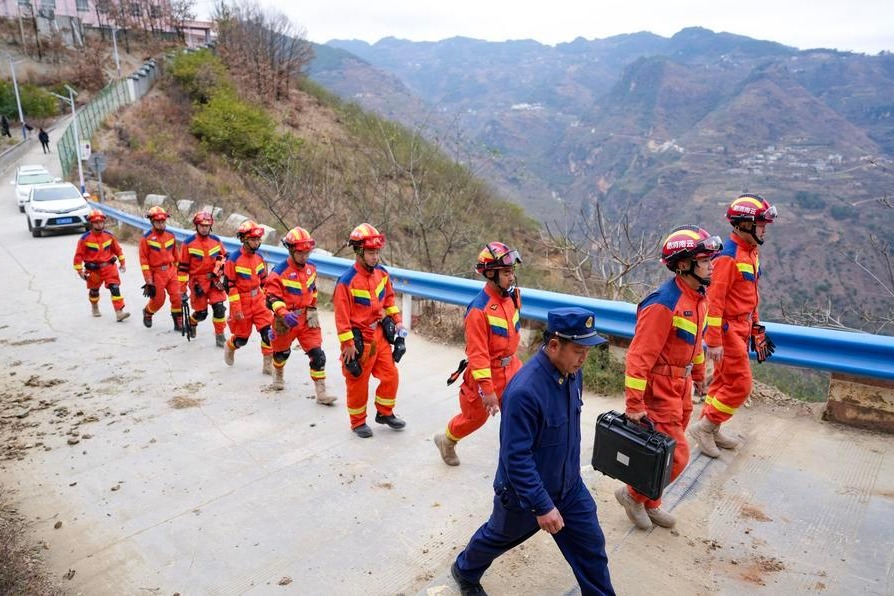
Emergency response systems sprang into action across southwestern China’s Yunnan Province following a significant seismic event that struck Qiaojia county on Monday evening. The 5.1-magnitude earthquake, occurring at 7:32 pm local time with a focal depth of 10 kilometers, triggered comprehensive disaster management protocols despite the absence of casualties or structural collapses.
According to official reports released by Tuesday afternoon, the tremor resulted in damage to approximately 1,540 residential structures while prompting the evacuation of 297 residents from 129 households. These individuals have been temporarily relocated to emergency shelters established within the affected region, with the village office in Hongshiyan—the epicenter area—serving as a primary refuge center.
Infrastructure assessment teams from provincial authorities have conducted rapid evaluations of over 63,000 dwellings, identifying predominantly minor structural damage including hairline fractures in auxiliary facilities and production structures. County Deputy Administrator Cao Shanyou confirmed that no residential buildings had collapsed, though the seismic activity did cause 19 mountain fissures, 262 minor rockfall incidents, and some roadway damage.
Financial support mechanisms were immediately activated, with the Yunnan Provincial Department of Finance allocating 5 million yuan (approximately $714,224) in emergency relief funding to facilitate disaster response operations. These resources will support hazard mitigation, secondary disaster prevention, and reconstruction initiatives throughout Zhaotong City’s administrative region.
The China Earthquake Administration implemented a Level-III emergency response, deploying specialized working teams to assist local relief operations. China’s four-tier emergency framework designates Level I as the most severe classification, indicating the current situation remains managed within provincial capabilities.
Personal accounts from residents illustrate the earthquake’s sudden impact. Zhao Kunyun, a Hongshiyan village local, described the intense shaking that prompted his family’s immediate evacuation. While his property sustained damage including a collapsed water tower and compromised retaining walls, structural engineers confirmed the main residence’s integrity.
Temporary shelter occupants like villager Qian Zhenzhen reported efficient crisis management, noting that authorities provided accommodation and provisions within 30 minutes of the seismic event. This coordinated response demonstrates China’s enhanced disaster preparedness protocols for moderate seismic events in geographically vulnerable regions.