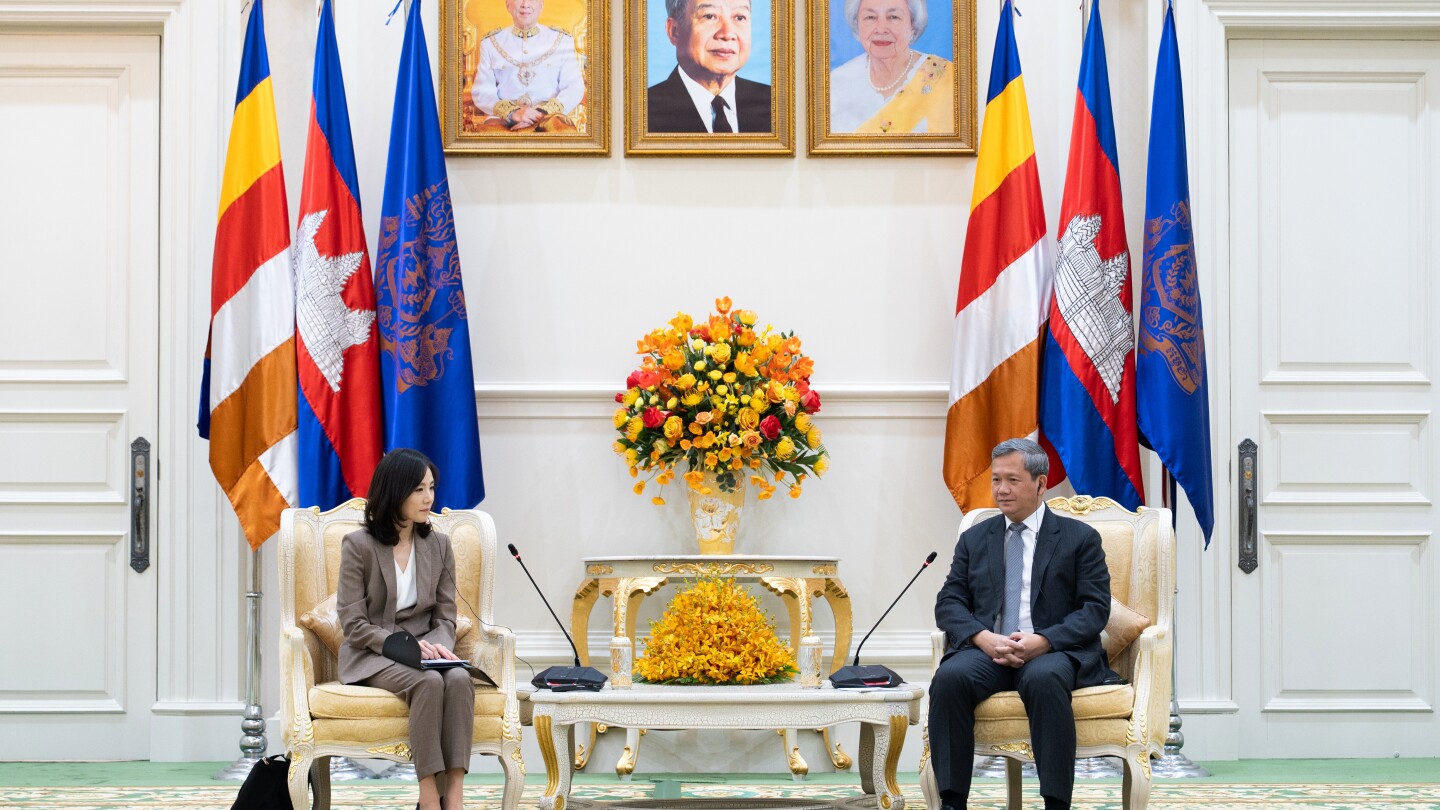
In a significant move to address the growing issue of online scams, South Korean and Cambodian officials convened in Phnom Penh on Thursday to discuss coordinated measures. This meeting follows the tragic death of Park Min-ho, a 22-year-old South Korean student who was reportedly trafficked and forced to work in a scam center in Cambodia. Park’s body was discovered in August in Cambodia’s Kampot province, with authorities attributing his death to cardiac arrest after enduring torture and beatings.
The South Korean delegation, led by National Security Director Wi Sung-lac, met with Cambodian Prime Minister Hun Manet to address the repatriation of South Korean nationals involved in online scams and the return of Park’s remains. Wi emphasized the urgency of resolving these issues, noting that disputes over autopsy procedures had delayed the repatriation process. However, an agreement was reached, and the results of the talks were expected to be announced later on Thursday.
Cambodia’s online scam industry has drawn international attention, with an estimated 200,000 people, including around 1,000 South Koreans, working in scam centers across the country. Many victims are lured with promises of high-paying jobs, only to be forced into illegal activities. In the first eight months of 2023 alone, 330 South Koreans were reported detained in Cambodia, with 80% of these cases resolved.
During the talks, both nations pledged to strengthen collaboration in combating transnational crimes, particularly online scams. Hun Manet emphasized that Cambodia and South Korea would work bilaterally to address the issue without third-party involvement. South Korea, meanwhile, is seeking the early repatriation of 60 nationals recently arrested in Cambodia on suspicion of scam involvement. Once repatriated, they will face investigations and potential legal consequences.
In response to the crisis, South Korea has implemented a travel ban for specific areas in Cambodia, including Bokor Mountain in Kampot province, where Park was found dead, as well as border towns Bavet and Poipet. The United Nations has highlighted Southeast Asia, particularly the Mekong Region, as a global hub for scams and illegal online gaming, with criminal gangs earning billions annually through fraudulent schemes.
Jeremy Douglas, Chief of Staff for the United Nations Office on Drugs and Crime, stressed the need for regional cooperation to tackle the issue, stating that the situation cannot be ignored. As both nations work towards a solution, the tragic case of Park Min-ho underscores the urgent need for international collaboration to combat human trafficking and online scams.