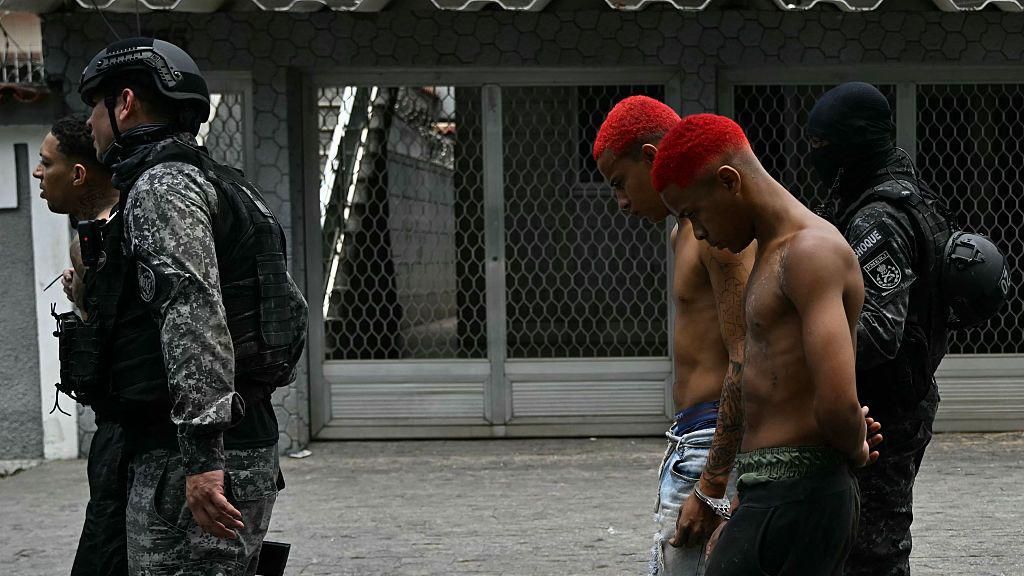
In the wake of Brazil’s most lethal police operation, new revelations are casting doubt on whether the raid truly achieved its stated goal of dismantling one of the country’s most formidable criminal gangs. The operation, which took place on October 28 in Rio de Janeiro, resulted in the deaths of 121 individuals, including four police officers. Rio de Janeiro State Governor Claudio Castro hailed the operation as a ‘success,’ showcasing over 100 seized rifles. However, human rights organizations have condemned the security forces for the high death toll and the perceived brutality of their actions. The operation, which deployed 2,500 officers to the Alemão and Penha neighborhoods, targeted the Comando Vermelho (Red Command) gang, which dominates a vast area of nine million square meters. Despite the arrests of numerous suspects, the gang’s top leader, Edgar Alves de Andrade, known as Doca, remains at large. Local media and academic experts have questioned the operation’s effectiveness, noting that none of the deceased matched the list of suspects provided by prosecutors. Residents of the affected areas report that the gang’s control remains largely unshaken, with armed men seen patrolling the community the day after the raid. The Comando Vermelho’s influence extends beyond drug trafficking, monopolizing essential services such as gas, cable television, internet, and transport, and enforcing strict rules on residents’ daily lives. The gang’s harsh punishments for transgressions include severe physical mutilation and execution. Despite the police’s efforts, the gang’s grip on the favelas appears unyielding, raising concerns about the long-term impact of such operations on public safety and human rights.