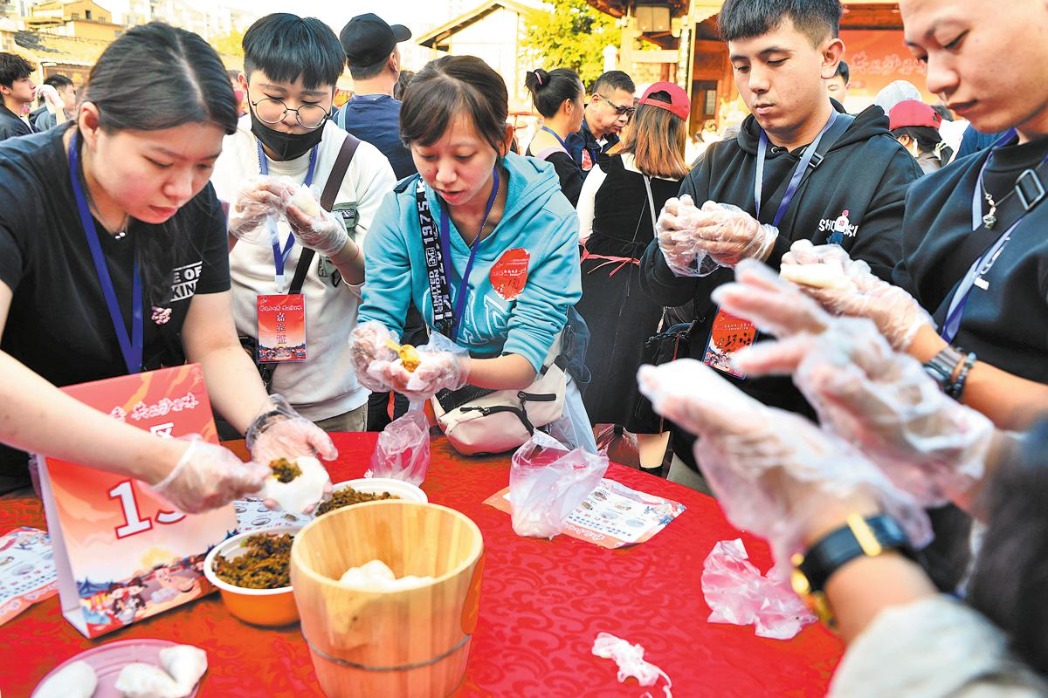
In the heart of Fujian province’s Shaxian district, a culinary revolution is transforming rural livelihoods through the power of traditional snacks. What began as humble street food carried on shoulder poles has evolved into a global phenomenon generating billions in annual revenue.
At Yubang village’s Taste of Origins snack street, 60-year-old Zhang Xiuji exemplifies this transformation. After decades operating makeshift eateries across China, she now enjoys stable employment in her hometown, skillfully preparing wontons and noodles that represent Shaxian’s culinary heritage. Her personal journey from debt-ridden migrant to prosperous local mirrors the brand’s extraordinary ascent.
The Shaxian snack tradition comprises over 200 varieties, with signature dishes including bianrou (springy meat wontons), banmian (peanut sauce noodles), and potstickers. According to Village Party Chief Zhang Changsong, this industry literally built the community: “In the 1980s and 90s, villagers carried this industry on their shoulders.” Of Yubang’s 1,200 residents, nearly 700 now derive their income from snack shops.
The scale of Shaxian’s success is staggering. From 88,000 outlets in 2020, the network has expanded to 100,000 establishments nationwide, with over 60,000 Shaxian natives operating stores. The industry achieved an extraordinary 55 billion yuan ($7.6 billion) in annual turnover by 2025.
Global expansion has been equally remarkable, with 241 overseas branches across 81 countries. Crucially, the brand has demonstrated remarkable adaptability, modifying recipes to suit local palates. In Saudi Arabia, pork-filled wontons have been reimagined to respect dietary customs, while Japanese outlets enhance peanut sauce intensity, and French locations add salad oil for local flair.
This globalization is underpinned by sophisticated supply chains. Where early vendors carried ingredients on poles, modern operators receive standardized ingredients via smartphone orders, eliminating the hardships of earlier generations.
The culinary success has sparked a homecoming trend, with food tourism drawing crowds to Shaxian’s origin village. As Zhang Xiuji reflects: “The village is thriving. We don’t have to wander anymore” – a sentiment capturing how traditional flavors have built modern prosperity.