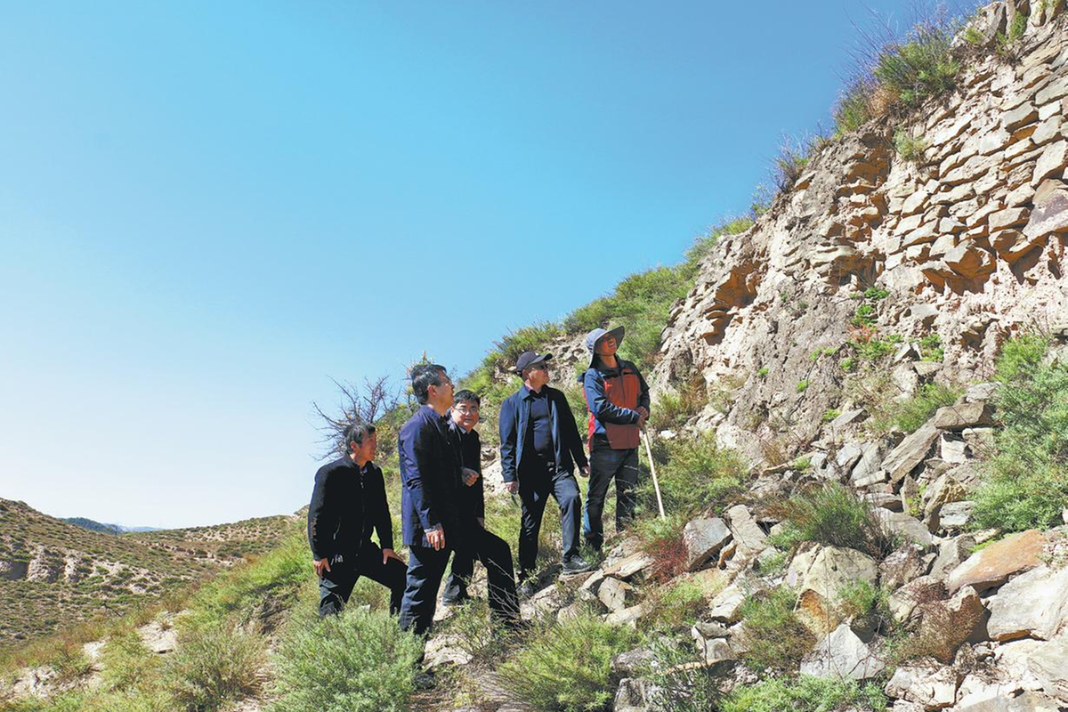
Archaeologists have made a groundbreaking discovery in Northwest China’s Shaanxi province, unearthing a vast network of 573 ancient stone cities that date back approximately 4,800 to 3,800 years. This extraordinary find, resulting from six years of intensive survey work in the Yulin region, fundamentally reshapes our understanding of early Chinese civilization patterns and challenges long-held historical paradigms.
The newly discovered urban centers, constructed between 2800 BC and 1000 BC, represent the largest and most sophisticated prehistoric stone city complex ever identified in northern China. According to Ma Mingzhi, associate researcher of Yulin’s cultural relics and archaeological survey team, these findings dramatically surpass previous records—before this survey, fewer than 200 prehistoric city sites had been documented nationwide, with only several dozen being stone constructions.
The architectural sophistication reveals a clearly stratified society with hierarchical urban planning principles. Higher-status inhabitants occupied central zones with more complex defensive walls, while outer areas housed those of relatively lower status. These settlements, strategically positioned along riverbanks, served multiple functions including military defense, residential settlement, and religious ritual. The Shimao site features particularly remarkable stone carvings depicting divine faces, dragons, and snakes, alongside noble burial grounds and structures believed to be ancestral temples.
This discovery effectively dismantles the traditional ‘Central Plains-centric theory’ of Chinese civilization development, demonstrating that northern Shaanxi served as a crucial cultural hub during the early Xia Dynasty (c. 21st-16th century BC). The scale of urbanization—with over 600 stone cities now identified across Shaanxi, Inner Mongolia, Shanxi, and Hebei provinces—corroborates ancient literary references to an ‘era of ten thousand states’ that historians previously considered potentially fictional.
Professor Han Jianye from Renmin University of China notes that the construction timeline coincides with the legendary Yellow Emperor era, suggesting the region served as both a cultural core and a defensive prototype for what would eventually become the Great Wall. The sites demonstrate clear evolutionary progression, with settlements expanding in scale, spatial layouts growing more complex, and construction techniques advancing significantly over centuries of continuous use.
Future research will focus on environmental support systems, handicraft production, regional economic development, and genetic analysis of population movements. These investigations promise to illuminate the material foundations that sustained this remarkable urban network and its interactions with contemporary ethnic groups, potentially rewriting our understanding of state formation processes in ancient East Asia.