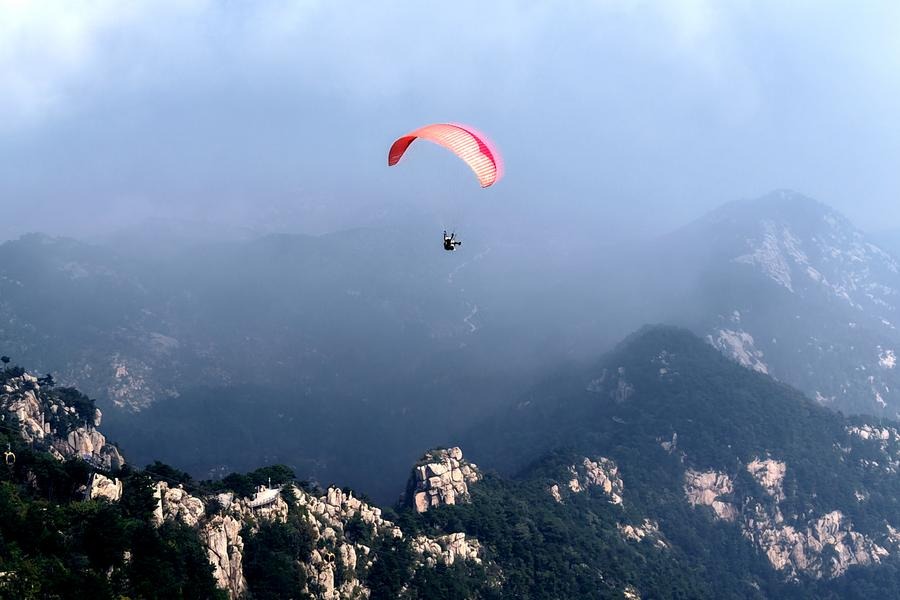
China’s tourism landscape is soaring to new heights with the rise of ‘CityFly,’ a trend that is transforming how travelers experience the country. Moving beyond traditional sightseeing, this innovative approach embraces low-altitude activities such as paragliding, skydiving, and scenic helicopter rides, offering thrill-seekers a vertical perspective of urban and natural landscapes. Emerging as a successor to the popular ‘Citywalk’ trend, CityFly is rapidly gaining traction among young Chinese travelers, driven by the nation’s booming low-altitude economy. In Zhejiang province, for instance, paragliding has evolved from a niche adventure to a mainstream attraction. Li Duo, a Shanghai resident in her early 20s, described her first paragliding experience as ‘breathtaking,’ gliding over bamboo forests and tea gardens on Mogan Mountain. Yang Aiping, manager of the paragliding base, reported a tenfold increase in visitors since 2019, with over 100,000 participants this year. The trend is not limited to Zhejiang. In Sanya, Hainan province, skydiving has become a major draw, with a 20% year-on-year increase in customers during the first quarter of 2025. Official data reveals that Sanya’s low-altitude tourism sector served 287,000 tourists in the first half of 2024, generating 730 million yuan in revenue and creating 2,300 jobs. Zhao Yuehua, an aviation industry expert, attributes this surge to China’s rapidly developing low-altitude economy, which has reduced flight costs from 3,000 yuan per person a decade ago to around 1,000 yuan today. The sector’s growth has been further bolstered by its inclusion in the 2024 government work report, positioning it as a key economic driver. Projections indicate that the low-altitude economy will reach a market size of 1.5 trillion yuan by 2025 and expand to 3.5 trillion yuan by 2035. With 89,000 active enterprises in the sector, including 11,700 new registrations in the first five months of 2025, CityFly is reshaping China’s tourism industry, offering travelers a three-dimensional experience and injecting new vitality into the market.