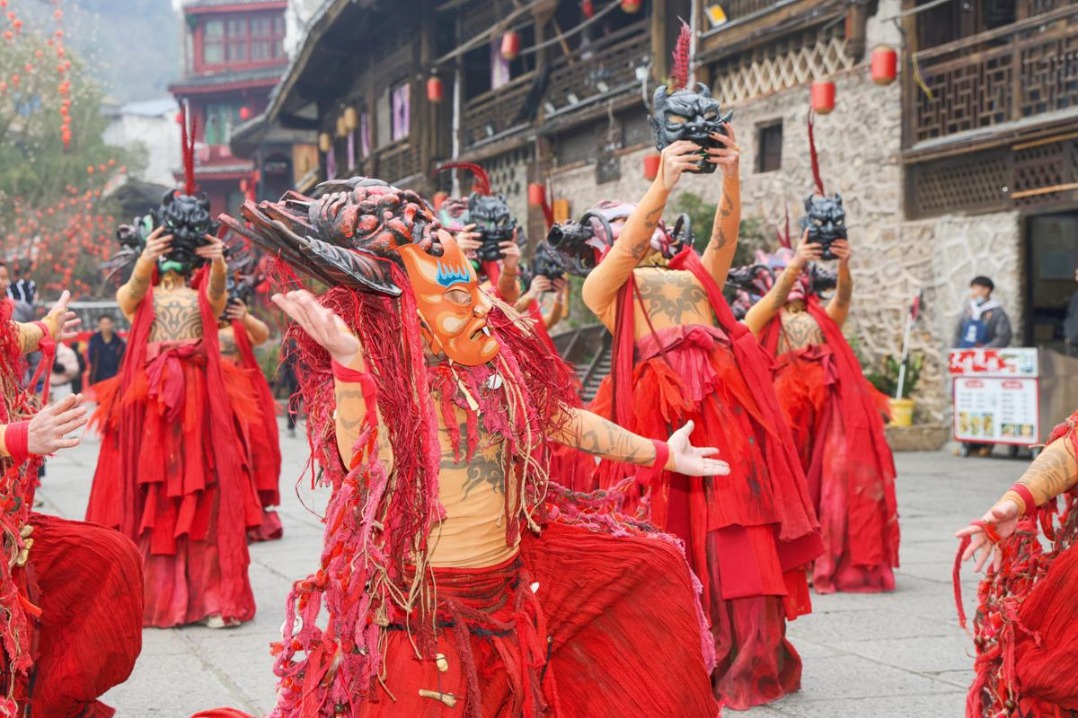
Huayuan County in Hunan Province served as the spectacular backdrop for a five-day cross-provincial Spring Festival celebration that concluded on Sunday, brilliantly showcasing the intangible cultural heritage of Chongqing Municipality alongside Hunan and Guizhou provinces. The event transformed the region into a dynamic cultural crossroads where traditions from Southwest China converged in a vibrant display of regional diversity.
The festivities commenced with an electrifying parade along the picturesque Qingshui River, featuring traditional lion and dragon dances that captivated attendees with their colorful performances and rhythmic energy. The cultural spectacle drew visitors from across the three regions and beyond, creating an atmosphere of shared celebration and cultural exchange.
Central to the event was an expansive riverside festival market where master artisans demonstrated and sold exquisite handicrafts including intricate Miao embroidery, traditional batik textiles, and locally sourced herbal medicines. Interactive stalls provided visitors with unique opportunities to learn traditional techniques directly from cultural heritage inheritors, fostering hands-on engagement with centuries-old practices.
Long Li’e, a renowned Miao embroidery artisan, highlighted the cultural significance and contemporary relevance of her craft during the celebration. ‘Miao embroidery represents not only our national intangible cultural heritage but also an essential skill that every woman in our Miao ethnic community traditionally masters,’ she explained to local media. ‘By adapting our embroidery techniques to create smaller, more accessible accessories for visitors, we’ve successfully bridged traditional artistry with modern market appeal.’
The event demonstrated how cultural preservation efforts are evolving through innovative approaches that maintain traditional authenticity while creating sustainable economic opportunities for local communities. The successful convergence of these three regional cultures provided a powerful model for cross-provincial cultural cooperation and heritage conservation in contemporary China.