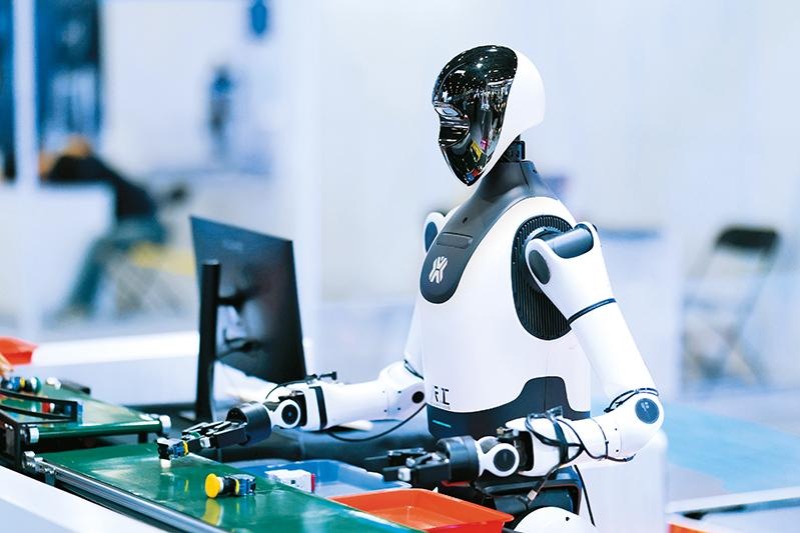
In a strategic response to mounting industry demands, China’s leading academic institutions are pioneering undergraduate programs in embodied intelligence—a cutting-edge field centered on intelligent systems with physical presence, exemplified by humanoid robotics.
Prestigious universities including Shanghai Jiao Tong University, Beihang University, and Zhejiang University are establishing dedicated curricula to cultivate expertise in this emerging discipline. The Shanghai Jiao Tong University initiative, spearheaded by Professor Lu Cewu—co-founder of embodied intelligence firm Noematrix—exemplifies the industry-academia integration central to these programs. The university aims to create collaborative platforms with leading companies and develop industry-linked practicum centers.
Employment prospects form a cornerstone of these programs. Beijing Institute of Technology’s embodied intelligence major plans to enroll 120 undergraduates, with approximately 58% expected to pursue advanced education and 42% transitioning directly to employment sectors including state-owned aerospace corporations, automotive manufacturers, and tech giants Huawei and Tencent.
This educational shift responds to substantial market growth projections. According to the Development Research Center of the State Council, China’s embodied intelligence industry is forecast to reach 400 billion yuan ($56.5 billion) by 2030, exceeding 1 trillion yuan by 2035. Current industry compensation reflects this demand, with embodied intelligence professionals commanding average annual salaries of 333,400 yuan—surpassing other AI sectors by approximately 14%.
The talent deficit is particularly acute, with Beijing Institute of Technology estimating a industry shortfall of approximately one million qualified professionals. Current educational offerings remain fragmented across traditional disciplines, with insufficient practical engineering training and outdated laboratory facilities.
Government prioritization has accelerated program development, with embodied intelligence designated a key future industry in China’s recent policy directives. The field joins quantum technology, biomanufacturing, and 6G communications as identified economic growth engines for the coming five-year period.
Global investment trends underscore the field’s prominence: humanoid robotics attracted over 32.8 billion yuan in financing through September 2025, with Chinese markets accounting for more than 80% of worldwide funding activities.