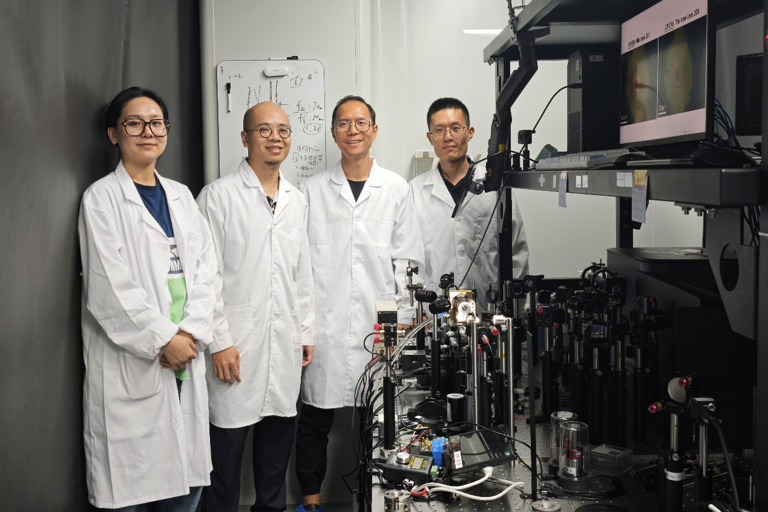
A groundbreaking study conducted by Chinese scientists has fundamentally altered our understanding of how Earth transformed from a primordial magma ocean into a habitable blue planet. Researchers from the Guangzhou Institute of Geochemistry, Chinese Academy of Sciences, have experimentally demonstrated that the planet’s deep mantle served as a massive water reservoir during its formative stages approximately four billion years ago.
The research, published in the prestigious journal Science on December 12, 2025, addresses a long-standing geological mystery: what happened to Earth’s water during the crystallization of its early magma oceans. The scientific community had previously struggled to explain where this crucial water was stored during the planet’s infancy.
The key discovery centers on bridgmanite, the predominant mineral in Earth’s lower mantle. Contrary to established scientific belief that this mineral had limited water storage capacity, the Chinese research team discovered that bridgmanite possesses a remarkable temperature-dependent ability to trap water molecules. Using advanced diamond anvil cell technology combined with laser heating systems, the scientists replicated the extreme conditions of the lower mantle—achieving pressures equivalent to depths of 660-2,900 kilometers and temperatures reaching approximately 4,100 degrees Celsius.
The experiments revealed a surprising paradox: the hotter the environment, the more efficiently bridgmanite captures and retains water during its formation from cooling magma. This temperature-sensitive storage mechanism suggests that during Earth’s early history, when the planet was substantially hotter, bridgmanite could have sequestered enormous volumes of water equivalent to between 0.08 and 1.0 times the volume of all modern oceans combined.
This primordial water reservoir, locked within the solid mantle for eons, has been gradually cycling back to the surface through volcanic activities over geological timescales. This gradual release played a crucial role in creating Earth’s oceans and establishing the hydrological conditions necessary for life to emerge and flourish. The research provides a comprehensive explanation for Earth’s transformation from a fiery, inhospitable world to the life-sustaining planet we know today.