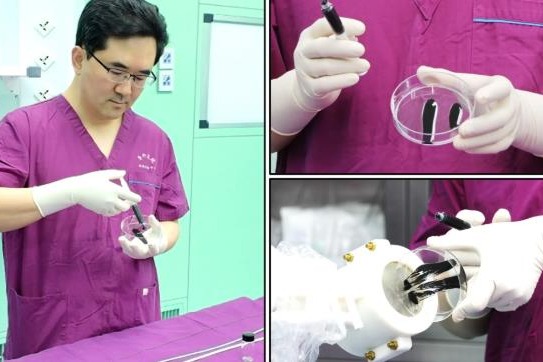
Chinese researchers have unveiled a groundbreaking medical innovation using magnetically controlled fluids to address cardiac complications associated with atrial fibrillation. The pioneering technique, developed through collaboration between the Shenzhen Institutes of Advanced Technology (SIAT) and Fuwai Hospital, represents a paradigm shift in left atrial appendage occlusion procedures.
The research, recently featured in the prestigious journal Nature, introduces a novel approach to preventing stroke-causing blood clots in heart patients. The technology utilizes a unique magnetic fluid composition that combines magnetic particles with curable carrier fluids, creating deformable robotic systems controllable through external magnetic fields.
According to corresponding authors Dr. Xu Tiantian of SIAT and Dr. Pan Xiangbin of Fuwai Hospital, the magnetofluid solution addresses critical limitations of conventional solid-based occlusion methods. The approximately 2.5 ml fluid volume demonstrates remarkable adaptability, flowing into complex cardiac structures and conforming to irregular cavities while maintaining precise magnetic guidance.
This innovation specifically targets left atrial appendage thrombosis, a common complication in atrial fibrillation patients that significantly elevates stroke risk. The magnetic fluid system achieves complete fluidic sealing, marking a technological transition from traditional solid adaptation approaches to a more advanced liquid-based methodology.
The research team emphasizes that this breakthrough offers a safer, more durable stroke prevention strategy while potentially reducing secondary surgical interventions and associated healthcare costs. Ongoing investigations will focus on long-term safety profiles and clinical translation pathways to bring this innovative treatment to patient care settings.