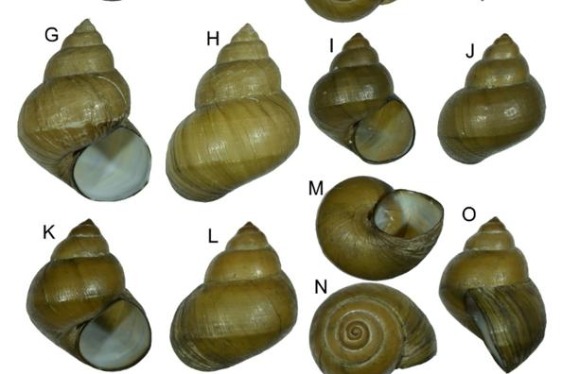
In a groundbreaking discovery, Chinese researchers have identified a living population of the freshwater snail species Yawangia leei, which had been presumed extinct for nearly a century. The finding, made in Guilin, Guangxi Zhuang Autonomous Region, marks a significant milestone in biodiversity research. The study, led by a team from the Kunming Institute of Zoology under the Chinese Academy of Sciences, utilized meticulous morphological and phylogenetic analyses to confirm the species’ identity. Yawangia leei is closely related to Dalipaludina, a group of snails native to the high-altitude still-water environments of Yunnan Province. Zhang Lejia, the study’s lead author and an assistant researcher at the institute, explained that the species was previously known only from fossilized shells discovered in Quaternary deposits within Guilin’s caves. The recent discovery of a small living population in a river near downtown Guilin has provided fresh insights into the species’ survival and evolution. The shells of the living specimens align perfectly with the fossilized type specimens, including all previously documented morphological variations. The findings, published on October 23 in the international journal Zoologica Scripta, underscore the importance of continued biodiversity research and conservation efforts.