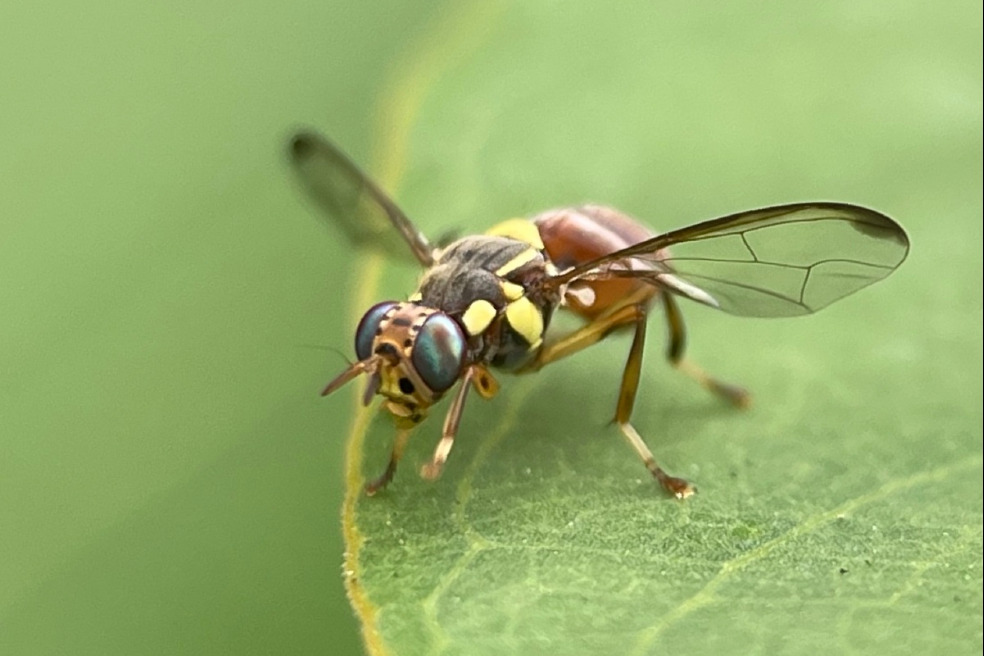
Researchers at Southwest University in Chongqing have made a groundbreaking discovery that explains why oriental fruit flies target unripe mangoes, potentially revolutionizing pest control methods for one of agriculture’s most damaging insects.
Led by Professor Wang Jinjun, the scientific team identified that female oriental fruit flies (Bactrocera dorsalis) possess a sophisticated sensory mechanism in their ovipositor—a specialized egg-laying organ—that detects hesperidin, a chemical compound naturally present in maturing mangoes. This finding, published in the prestigious Proceedings of the National Academy of Sciences, reveals the evolutionary adaptation that drives the pest’s destructive behavior.
The study demonstrates that as mangoes ripen, hesperidin concentrations increase to levels that become toxic to fruit fly offspring. The compound significantly reduces egg hatching rates, suppresses larval development, and decreases adult emergence success. To avoid these detrimental effects, female flies have evolved the ability to ‘taste’ hesperidin levels using sensory receptors located at the tip of their ovipositor, which they use to pierce fruit before egg deposition.
Professor Jiang Hongbo, a key member of the research team, explained that this discovery enables two innovative approaches to pest management: developing targeted interventions that exploit the fly’s sensory system, and creating early warning systems that monitor chemical changes in fruit to predict infestation risks before damage occurs.
The oriental fruit fly causes substantial economic losses across tropical and subtropical regions by triggering premature fruit drop before farmers can detect infestations. This research provides the first comprehensive understanding of the biological mechanisms behind the pest’s selective egg-laying behavior, offering hope for more effective and environmentally friendly control strategies.