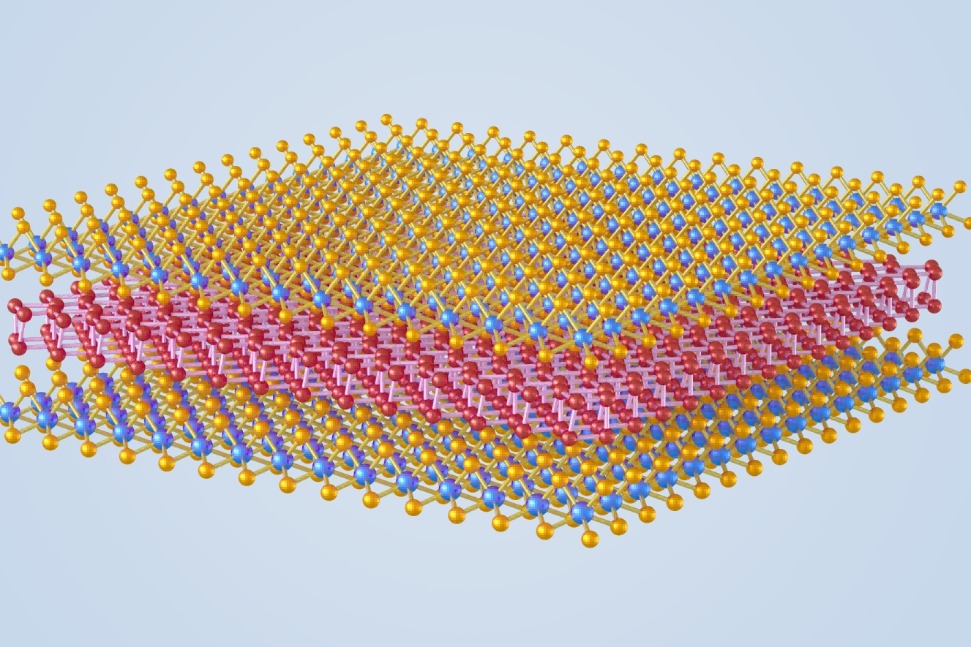
In a landmark achievement for materials science, Chinese researchers have earned global recognition for creating the world’s first two-dimensional metals, an accomplishment long considered nearly unattainable. This groundbreaking work, led by a team at the Institute of Physics under the Chinese Academy of Sciences, has been selected among Physics World’s prestigious “Top 10 Breakthroughs for 2025.”
The research, published in the renowned journal Nature in March 2025, represents a quantum leap in materials science that could potentially propel the next stage of human technological advancement. Since the discovery of monolayer graphene in 2004, 2D materials have fundamentally transformed scientific understanding of material properties and driven unprecedented innovations in condensed-matter physics.
According to Professor Zhang Guangyu, the project’s lead scientist, creating 2D metals presented extraordinary challenges due to the strong metallic bonds between atoms that occur in all directions. “The metallic bonding nature made conventional approaches to 2D material synthesis ineffective,” Zhang explained. “We had to fundamentally rethink material fabrication at the atomic level.”
The research team pioneered an innovative atomic-scale manufacturing technique called the van der Waals squeezing method, which enabled the creation of diverse 2D metals including bismuth, tin, lead, indium, and gallium. These ultra-thin materials measure just one millionth the thickness of a standard A4 paper sheet and approximately one 200,000th the diameter of a human hair.
The implications of this breakthrough extend across multiple technological domains. These novel 2D metals could revolutionize numerous industries through ultra-micro low-power transistors, high-frequency communication devices, transparent display technology, ultra-sensitive detection systems, and highly efficient catalytic processes.
Physics World, the flagship publication of the Institute of Physics (the professional body for physics in the UK and Ireland), annually recognizes achievements that demonstrate significant scientific importance, advance the frontiers of knowledge, and attract broad attention from the global physics community. The selection criteria emphasize rigorous scientific validation, seamless integration of theory and experiment, and profound implications for future research and applications.