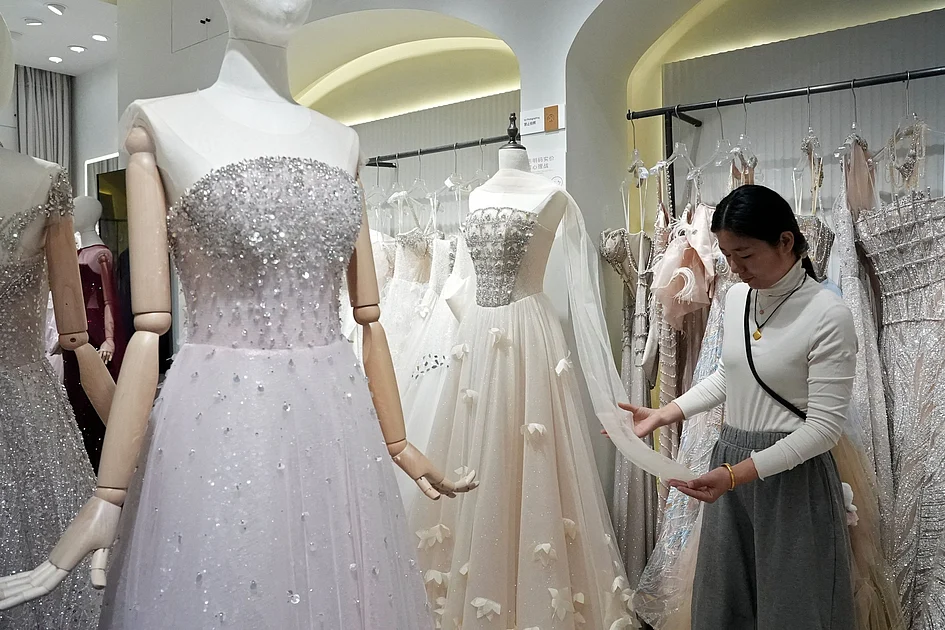
China’s wedding industry is experiencing a notable resurgence as new government policies and cultural factors reverse a decade-long decline in marriage rates. According to recent data from the Ministry of Civil Affairs, marriage rates increased by 8.5% during the first nine months of 2025, marking a significant shift in the country’s demographic landscape.
The turnaround follows a particularly poor showing in 2024, which many Chinese couples considered an inauspicious year for marriage. Chen Juan, co-owner of Luoyi Bridal in Suzhou’s massive Huqiu Bridal City, explains: “Many couples deliberately postponed their weddings to 2025, which is viewed as more favorable for marriage.”
A key policy change implemented in May 2025 has further stimulated the recovery. The new regulation allows couples to marry anywhere in China rather than being restricted to their place of residence. This reform has triggered a competitive response among local governments, with many establishing pop-up registration offices at scenic spots, music festivals, shopping malls, and even subway stations to attract marriage tourism.
Despite the positive trends, vendors remain cautiously optimistic. Zhu Jiaomei, a 31-year-old custom gown seller, emphasizes that economic factors outweigh specific wedding policies: “The most important thing is that the economy improves, and everyone has confidence in the future. Current budgets are commonly half of what we saw before the COVID-19 pandemic.”
The high cost of marriage and childrearing continues to deter many young Chinese. In response, some municipalities have introduced cash vouchers for newlyweds to offset expenses. For parents like wedding shoe seller Cheng Yonggui, the financial pressures are deeply personal. With two sons approaching marriageable age, she faces the prospect of providing apartments, cars, and potentially dowries that could cost “at least a million yuan per son.”
While the Year of the Horse brings cultural optimism for success, industry professionals agree that sustained economic improvement and additional government incentives will be crucial for maintaining the marriage rebound beyond temporary factors.