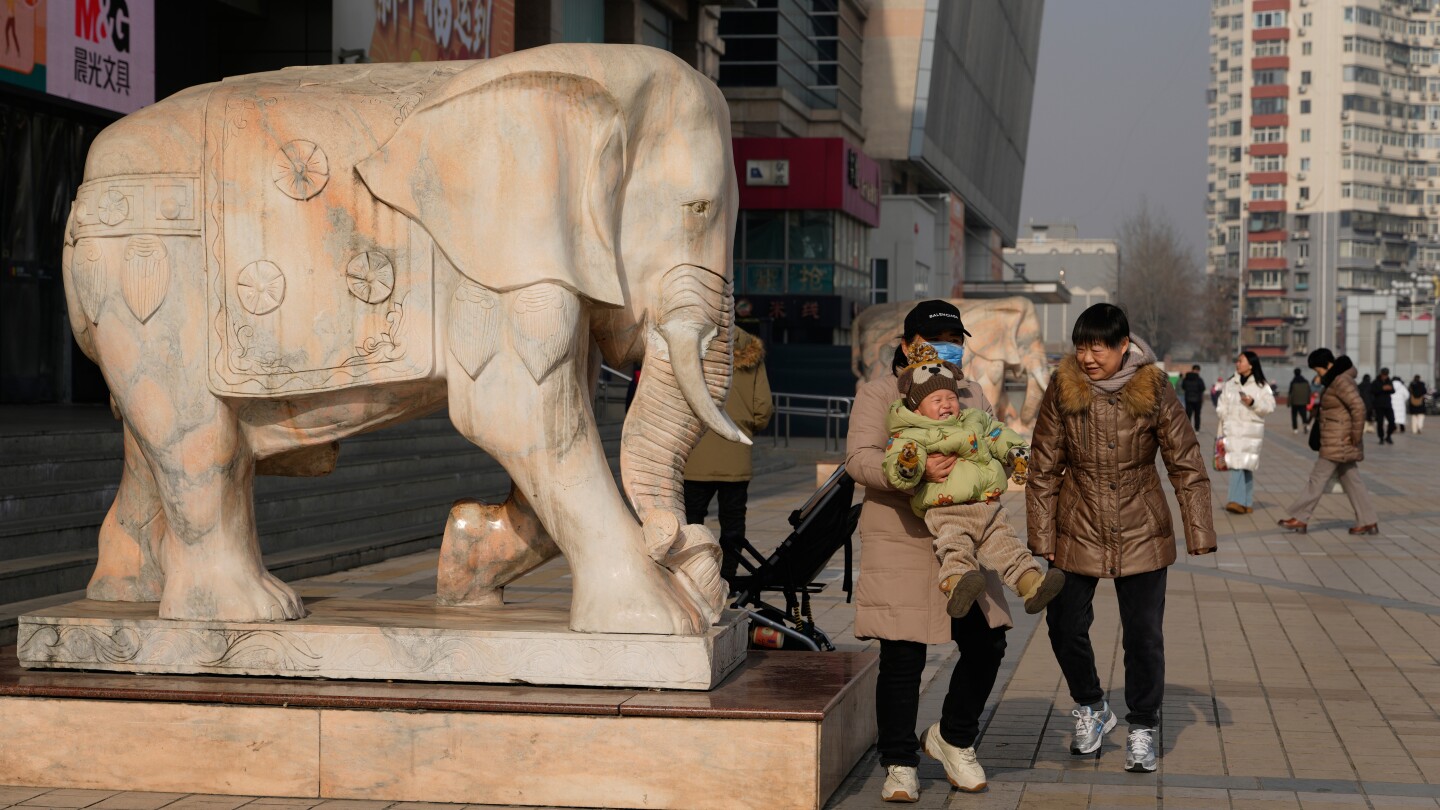
A decade after dismantling its infamous one-child policy, China confronts an escalating demographic crisis as innovative pronatalist measures fail to reverse the nation’s persistent population decline. Recent statistics reveal China’s populace shrank for the fourth consecutive year in 2025, with the current tally standing at 1.404 billion—a reduction of 3 million from the preceding year.
The most alarming data emerges from birth figures, which show merely 7.92 million newborns in 2025. This represents a dramatic 17% decrease (1.62 million fewer births) from previous counts, decisively countering the slight resurgence observed in 2024. This continuation of the downward trajectory marks the seventh year of declining births since 2023, when India surpassed China as the world’s most populous nation.
Demographic experts estimate China’s fertility rate has plummeted to approximately 1.0—far beneath the 2.1 replacement level required for population stability. This critical shortage of new births compounds the nation’s existing demographic pressures, creating an inverted population pyramid with profound implications for future economic stability and social welfare systems.
Despite implementing creative policy interventions—including direct cash subsidies of 3,600 yuan ($500) per child, tax exemptions for childcare services and matchmaking agencies, and the controversial imposition of a 13% value-added tax on contraceptives—authorities have achieved limited success in altering reproductive behaviors. Surveys indicate most families attribute their reluctance to expand to the exorbitant costs and intense pressures of child-rearing within China’s hyper-competitive society, exacerbated by ongoing economic uncertainties that strain household budgets.
The government’s approach has evolved through multiple phases: transitioning from the one-child policy to a two-child limit in 2015, then expanding to three children in 2021. However, these incremental relaxations have proven insufficient to counteract deeply entrenched social and economic deterrents to larger families, leaving China grappling with a demographic challenge that threatens to reshape its global standing and domestic future.