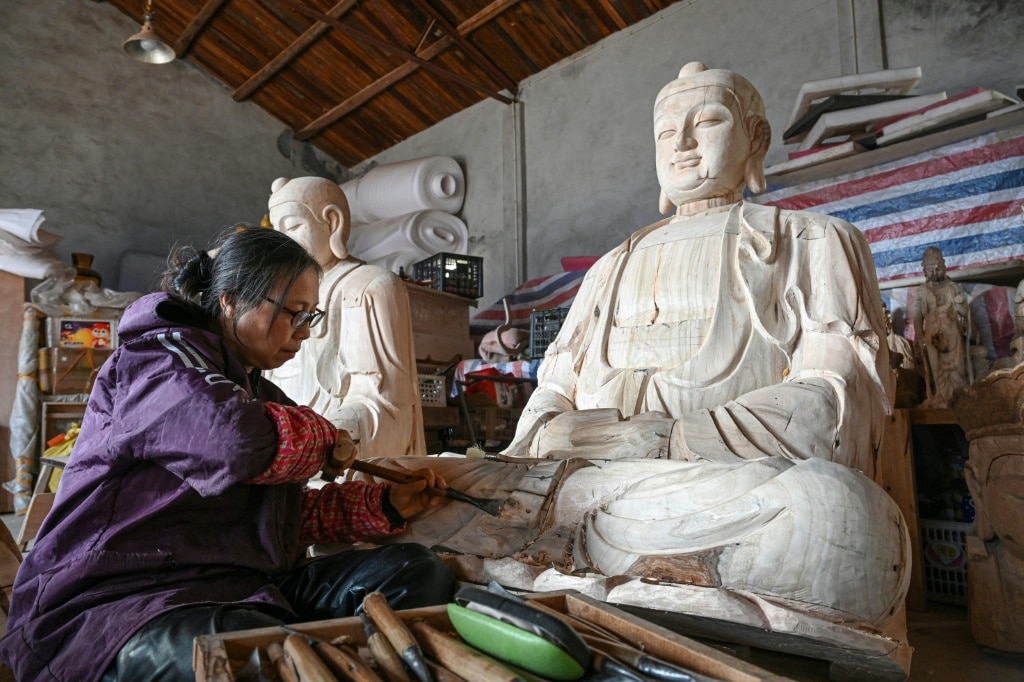
In the dusty workshops of Chongshan village near Suzhou, a centuries-old tradition of sacred woodcarving stands on the brink of disappearance. Master craftsman Zhang meticulously shapes a block of wood into a divine foot beneath the silent gaze of dozens of unfinished life-sized Buddhist and Taoist statues, continuing a family legacy that spans multiple generations.
This specialized craft, requiring five to six years of dedicated apprenticeship to master, faces an existential crisis as younger generations reject the demanding profession. Zhang, who learned the intricate art from his father during his teenage years, acknowledges the inevitable: ‘Once our generation retires, there will be no one left to carry on the tradition.’
The decline stems from a combination of inadequate financial compensation and modern youth’s reluctance to invest the necessary time and energy. The village experienced a temporary resurgence in orders during the late 20th century when China relaxed religious restrictions, leading to a nationwide revival of temple construction and decoration.
However, the market has now reached saturation point, with most temples across China already furnished with statues. At another workshop, 71-year-old artisan Gu recalls adapting to political pressures during the Cultural Revolution by producing secular handicrafts when religious expression was suppressed. Specializing in carving expressive Buddha heads, Gu demonstrates how each gilded figure conveys unique emotional depth – some smiling, others crying, with renowned monk Ji Gong sculptures even displaying contrasting expressions on each side of the face.
While outsiders perceive these creators as artists, Zhang maintains a pragmatic perspective: ‘People look at us like we’re artists. But to us, we’re just creating a product.’ This disconnect between cultural significance and economic reality ultimately threatens the survival of one of China’s most spiritually significant artisanal traditions.