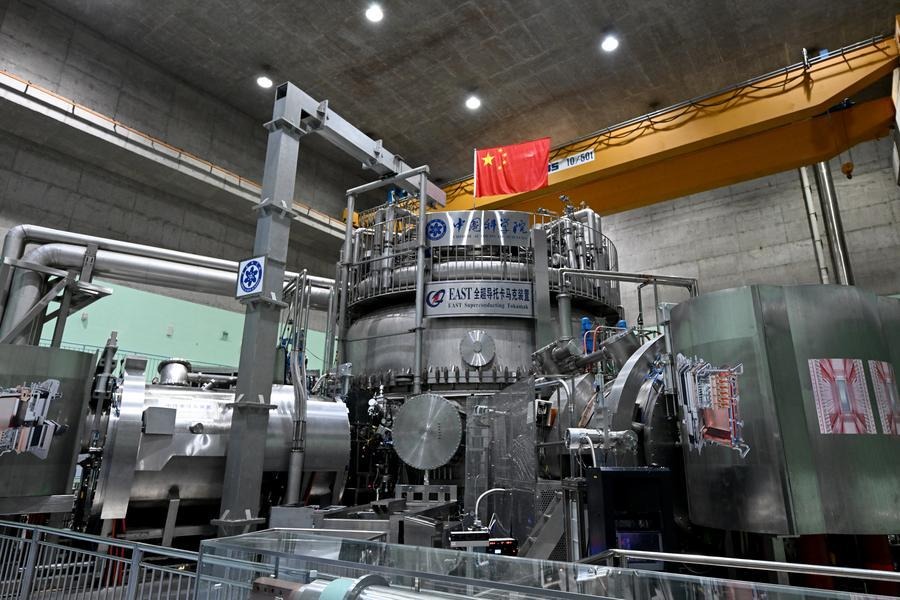
In a groundbreaking move for global scientific collaboration, China has announced it will grant international researchers access to ten of its most advanced scientific facilities throughout 2026. The announcement was made during the opening ceremony of the Zhongguancun Forum Annual Conference in Beijing, marking a significant step in international scientific cooperation.
The facilities opening to global academia represent China’s cutting-edge research infrastructure, including the remarkable Five-hundred-meter Aperture Spherical Radio Telescope (FAST) in Guizhou province—the world’s largest single-dish radio telescope. Also available will be the Space Environment Simulation and Research Infrastructure in Heilongjiang province and the Experimental Advanced Superconducting Tokamak nuclear fusion research facility in Anhui province, among other premier installations.
This initiative forms part of the Action Plan for International Cooperation in Open Science, launched collaboratively by China and international partners in 2025. The program aims to establish a more transparent, equitable, and non-discriminatory global environment for scientific and technological advancement. The move aligns with China’s broader strategy of driving innovation through high-level international partnerships, as outlined in the recently released 15th Five-Year Plan (2026-30) for national economic and social development.
The policy framework emphasizes creating an open innovation ecosystem with global competitiveness while supporting collaborative efforts among scientists worldwide to address fundamental and frontier scientific challenges. This unprecedented access to China’s scientific infrastructure represents a new chapter in global research cooperation, potentially accelerating breakthroughs across multiple scientific disciplines.