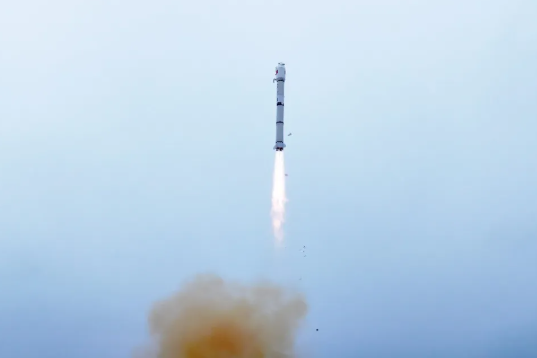
China has marked another significant achievement in its space exploration program with the flawless launch of the Shiyan-33 experimental satellite. The mission commenced at precisely 12:11 pm Beijing Time on Friday from the Jiuquan Satellite Launch Center in northwest China.
The satellite was propelled into space utilizing a Long March 2C carrier rocket equipped with the advanced Yuanzheng-1S upper stage propulsion system. This sophisticated launch vehicle configuration successfully delivered the Shiyan-33 satellite to its predetermined orbital trajectory, confirming the complete success of the deployment operation.
This launch represents a historic milestone for China’s space program, constituting the 635th flight mission of the renowned Long March rocket family. The consistent performance of these launch vehicles demonstrates China’s growing capabilities and reliability in space transportation systems.
The Jiuquan Satellite Launch Center, China’s first and most experienced satellite launch facility, continues to play a pivotal role in the nation’s space ambitions. Established in 1958, this strategic installation has been the departure point for numerous significant space missions, including China’s first satellite launch in 1970 and multiple crewed space flights.
The Shiyan series of satellites typically serve experimental purposes, testing new technologies, materials, and systems in space environments. These missions provide valuable data that contributes to the advancement of China’s space capabilities and technological innovation across multiple aerospace disciplines.