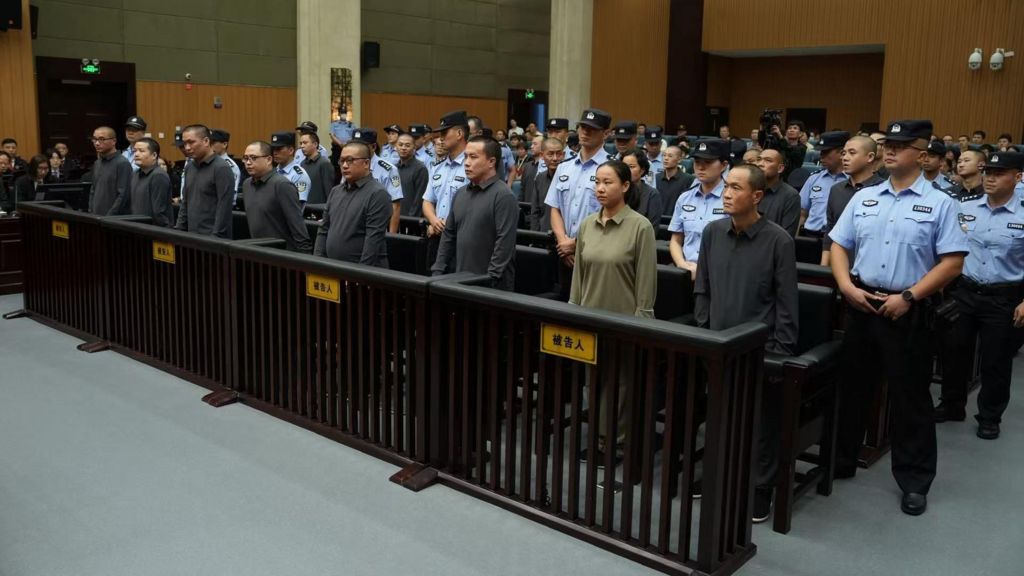
A Chinese court has delivered a landmark verdict, sentencing 39 members of the infamous Ming family for their involvement in extensive criminal operations in Myanmar. According to Chinese state media, 11 members were handed the death penalty, while five received death sentences with a two-year reprieve. Additionally, 11 were sentenced to life imprisonment, and the remaining members received prison terms ranging from five to 24 years. The Ming family, part of one of the four dominant clans in Laukkai, a town near the China-Myanmar border, transformed the area into a hub for illegal gambling, drug trafficking, and scam centers. Their operations, which began in 2015, reportedly generated over 10 billion yuan ($1.4 billion) in illicit profits. The court also revealed that the family was responsible for the deaths of several scam center workers, including an incident where workers were shot to prevent their return to China. Laukkai, initially developed to cater to Chinese gambling demand, evolved into a center for money laundering and human trafficking. The Ming family’s activities were part of a broader ‘scamdemic,’ as termed by the UN, which has seen over 100,000 foreign nationals, predominantly Chinese, lured into forced labor in scam centers. The family’s downfall began in 2023 when Myanmar cracked down on their operations, leading to their arrest and extradition to China. Ming Xuechang, the family patriarch, reportedly committed suicide, while other members confessed to their crimes. This sentencing underscores China’s commitment to combating cross-border criminal activities and serves as a warning to other organized crime networks in the region.