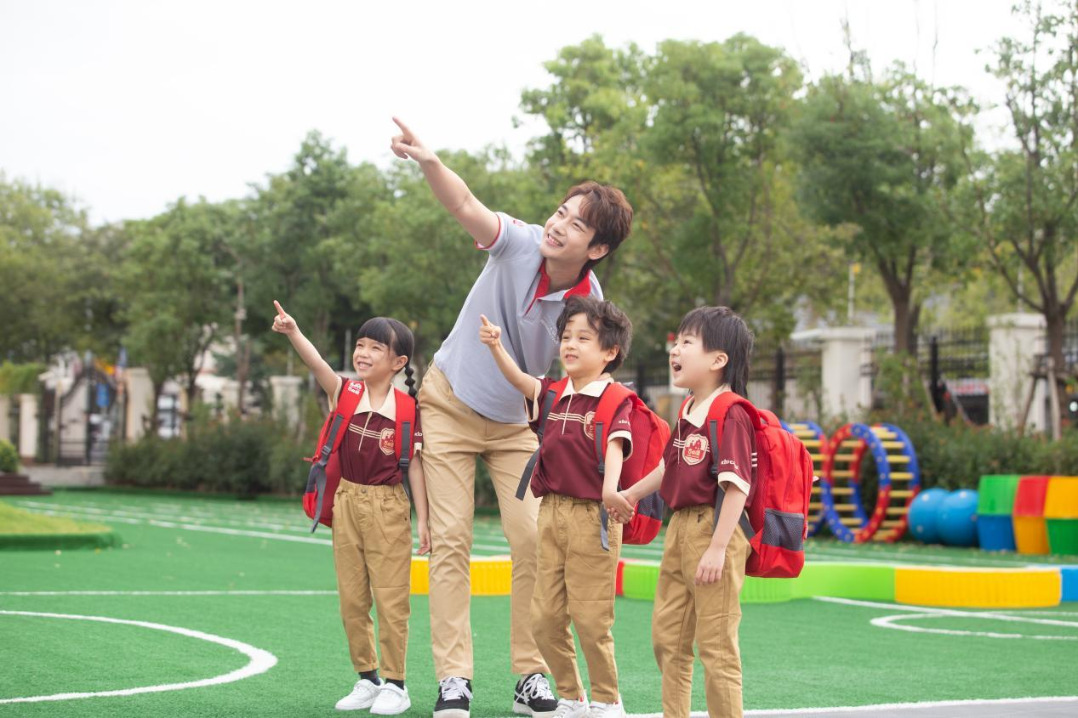
China has unveiled a comprehensive national guideline to transform urban environments into safer, more inclusive spaces designed specifically for children’s needs and perspectives. The landmark policy document, jointly issued by the National Development and Reform Commission and the National Working Committee on Children and Women, establishes a framework for integrating child-centered approaches across all aspects of urban planning and public services.
The initiative builds upon successful pilot programs that have already benefited over 110 million children across 116 Chinese cities by the end of 2025. Rather than maintaining these as temporary city-level experiments, the new guideline institutionalizes child-friendly development as a permanent, nationwide mechanism that will guide policy through the 15th Five-Year Plan period (2026-2030) and beyond.
According to Wei Yifang, an associate researcher at the Academy of Macroeconomic Research, the guideline represents a holistic approach covering both urban and rural children through integrated policies, public services, rights protection, and living environments. The framework mandates that all public policies must incorporate children’s perspectives, with local governments required to prioritize children’s development in resource allocation and policymaking decisions.
Key implementation measures include adapting public spaces to better serve children’s needs through increased sports facilities, entertainment venues, and creative use of underutilized urban areas. Transportation systems will undergo significant upgrades, with public buses, subways, and transit hubs incorporating child-friendly features. Ride-hailing platforms will prioritize families with young children, while railways and airlines will enhance services for infants and unaccompanied minors.
The healthcare sector will see substantial improvements, including the incorporation of HPV vaccines into national immunization programs offering free vaccinations to girls aged 13 and above. Medical facilities will establish 24-hour emergency channels for children under three with critical conditions. Educational institutions will open sports facilities during holidays, while scenic areas will expand discounted admission policies for minors.
Notable progress has already been achieved in several municipalities. Over 20 major cities, including Beijing, have raised height limits for free subway rides to 1.3 meters. Shanghai and Shaoxing have introduced dedicated child-friendly subway lanes, while Wenzhou and Zhuhai have relaxed restrictions on the number of children traveling free with adults.
The initiative represents China’s commitment to creating visible, tangible improvements in children’s daily lives through attention to both major policy frameworks and seemingly small but crucial practical matters, ultimately aiming to build warmer, more welcoming environments for children and their families nationwide.