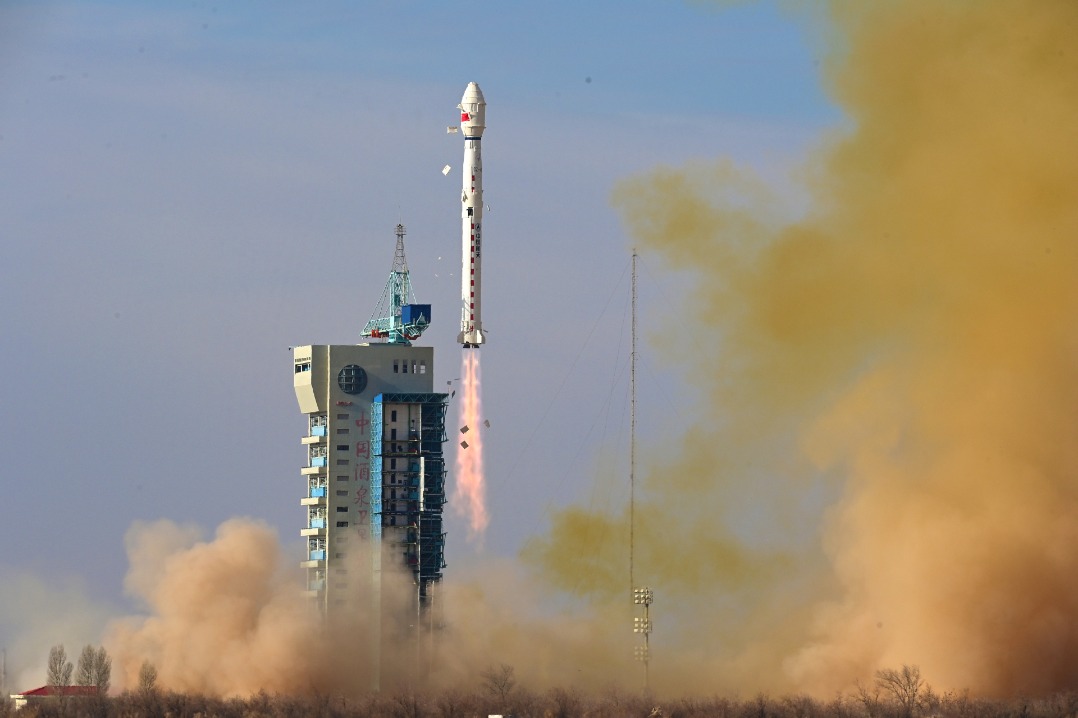
China has advanced its Earth observation capabilities with the successful orbital deployment of the Tianhui 7 satellite on Tuesday afternoon. The sophisticated spacecraft was propelled into space aboard a Long March 4B rocket that launched precisely at 12:12 pm from the Jiuquan Satellite Launch Center located in Inner Mongolia Autonomous Region.
According to the China Aerospace Science and Technology Corporation (CASC), the state-owned enterprise overseeing China’s space program, the newly deployed satellite represents a significant advancement in remote sensing technology. Manufactured by the China Academy of Space Technology, Tianhui 7 is specifically engineered to conduct comprehensive geological surveys, detailed land resource investigations, and a series of scientific experiments that will contribute to environmental monitoring and resource management.
The launch vehicle, developed by the Shanghai Academy of Spaceflight Technology, demonstrated its reliable payload capacity by delivering the satellite to its intended sun-synchronous orbit approximately 700 kilometers above Earth. The Long March 4B model is capable of transporting multiple satellites with a combined mass of up to 2.5 metric tons to this commonly used Earth observation altitude.
This mission marks a notable milestone in China’s space exploration endeavors, representing the nation’s 92nd space mission and the 622nd flight overall for the Long March rocket series. The successful deployment continues China’s expanding presence in space-based Earth observation and scientific research, enhancing the country’s capabilities in natural resource management and environmental monitoring.