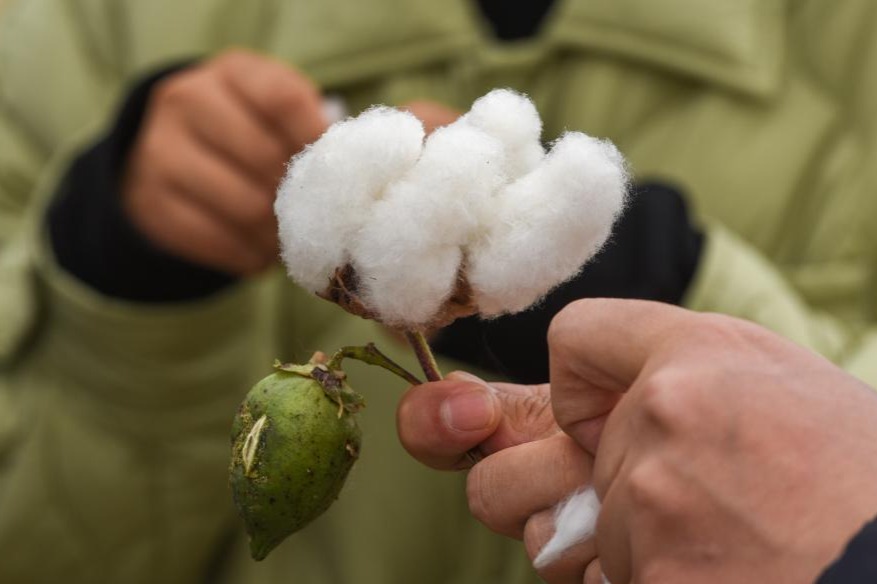
Chinese researchers have achieved a landmark breakthrough in agricultural genomics by constructing the world’s most comprehensive genetic map of upland cotton, the source of over 95% of global natural fiber. This pioneering study, conducted by a team from the Institute of Cotton Research of the Chinese Academy of Agricultural Sciences and published in Nature Genetics, reveals previously unknown evolutionary pathways and hidden genetic traits that could revolutionize cotton cultivation worldwide.
The research addresses a critical challenge in modern agriculture: decades of intensive cultivation and selective breeding have severely narrowed the genetic diversity of commercial cotton varieties, making crops increasingly vulnerable to diseases, pests, and climate change while limiting quality improvements. To overcome this bottleneck, the team led by Li Fuguang and Yang Zhao’en developed what they term a ‘super pangenome’—an extensive genetic library compiled from 107 representative varieties of upland cotton.
This sophisticated genomic toolkit enabled the identification of large-scale structural variations in the plant’s DNA, including significant chromosomal rearrangements, exchanges, and inversions that drive environmental adaptation. Among the most significant discoveries was the identification of a specific large-scale chromosomal exchange indicating that modern cotton originated from an unexpectedly narrow lineage in Central America.
The research successfully connected these structural variations to crucial agricultural traits, identifying 69 genetic loci associated with fiber quality and yield—62 of which were entirely new discoveries invisible to traditional genetic analysis. The team also mapped specific variations controlling natural pest resistance and fiber color, and uncovered a new genetic region (VWD11) that confers resistance to Verticillium wilt, a devastating fungal disease.
Beyond individual genes, the study reconstructs cotton’s evolutionary journey through a three-stage domestication model: originating in Mexico’s Yucatan Peninsula, spreading to Guatemala, and then disseminating globally. The research demonstrates how historic natural hybridization with another cotton species introduced valuable adaptive traits into the upland cotton genome.
Leading agricultural scientists have praised the study’s significance. Chen Xiaoya, an academician of the Chinese Academy of Sciences, noted that the research ‘provides a new perspective for understanding cotton domestication and offers crucial genetic markers for accelerating biological breeding.’ Zhang Xianlong, an academician of the Chinese Academy of Engineering, highlighted how the team ‘convincingly show that large-scale structural variations are the core driver of environmental adaptation.’
According to corresponding author Li Fuguang, this genetic roadmap transforms breeding ‘from a broad search into a targeted engineering process.’ The findings are particularly vital for China, the world’s largest cotton producer and consumer, to enhance agricultural resilience and sustainability, with significant implications for global textile security.