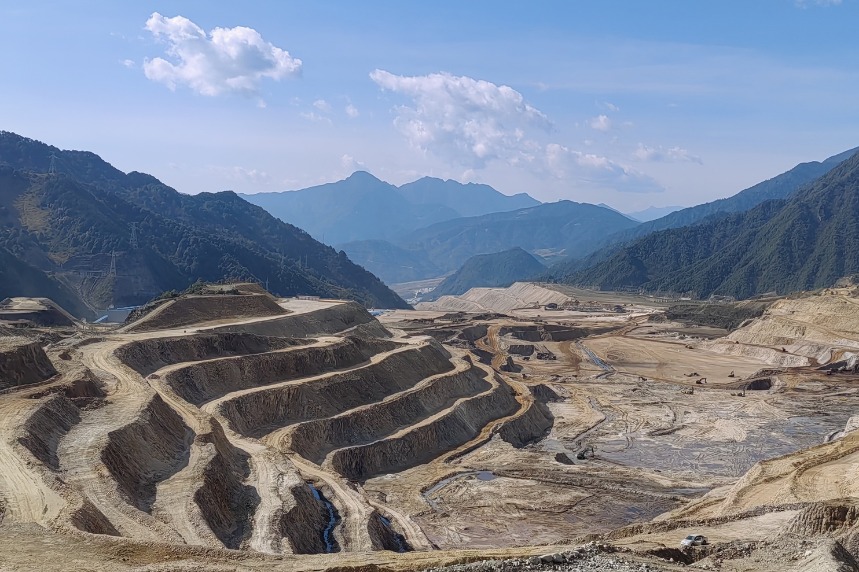
China has announced a groundbreaking geological discovery with the identification of the world’s second-largest light rare earth deposit in Mianning County, Sichuan Province. The Ministry of Natural Resources revealed on Tuesday that the find adds a substantial 9.67 million metric tons of rare earth oxides to the nation’s reserves, representing a remarkable 300 percent increase in current inventory.
The newly discovered deposit contains rare earth oxides that are critically important for modern industrial applications and advanced manufacturing sectors. These materials serve as essential components in the production of magnetic and fluorescent materials that power various high-technology devices and industrial equipment.
Beyond the rare earth elements, geological surveys identified significant associated resources within the Maoniuping mining area. The discovery includes massive deposits of fluorite totaling 27.14 million tons and barite reserves measuring 37.23 million tons, both classified as ultra-large deposits according to international mining standards.
Fluorite, a non-renewable mineral resource, represents the primary source of industrial fluorine that is indispensable for emerging and future-oriented industries. Barite, valued for its unique chemical properties including resistance to acids and alkalis, high density, and exceptional radiation absorption capabilities, serves as a critical raw material across multiple sectors including petroleum, chemical manufacturing, pharmaceutical production, and construction industries.
This discovery significantly enhances China’s strategic mineral resources position globally while providing substantial raw material security for high-tech manufacturing sectors dependent on these specialized materials.