As China welcomed the Year of the Horse in 2026, the nation’s Spring Festival celebrations showcased a remarkable synthesis of centuries-old cultural traditions and advanced technological innovations, creating a uniquely modern expression of ancient customs.
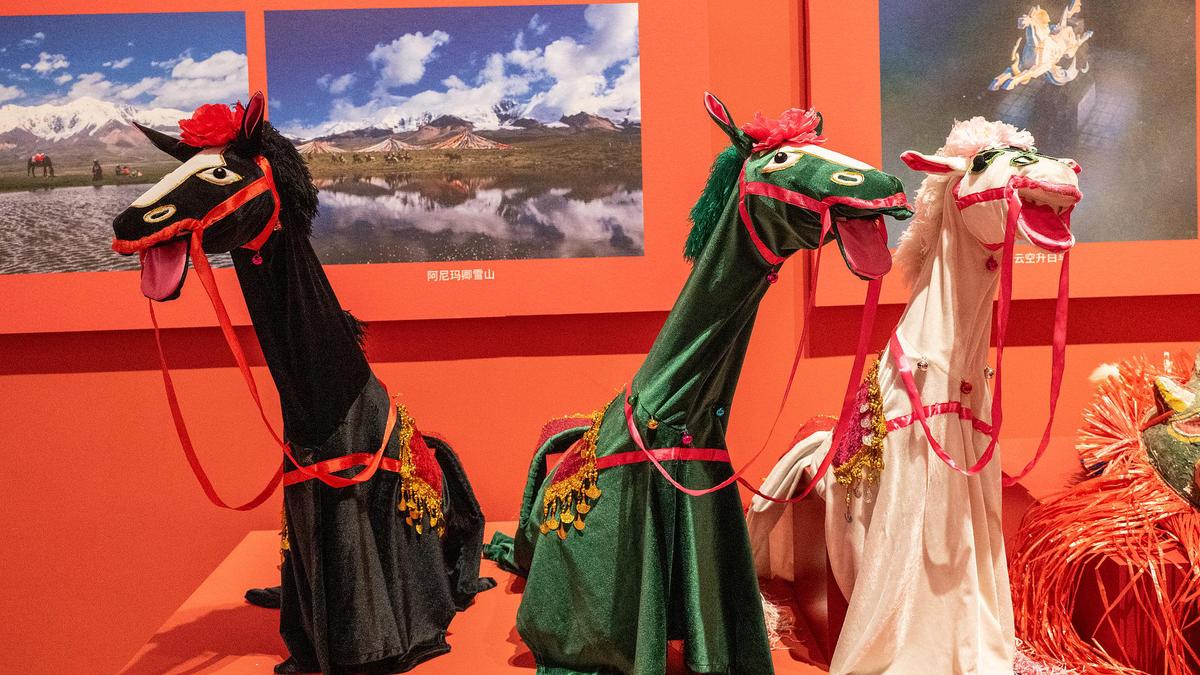
In Chun’an county, Zhejiang province, over 200 performers revived the Southern Song Dynasty (1127-1279) tradition of Bamboo Horse Dancing, a National Intangible Cultural Heritage item since 2014. The vibrant spectacle featured dancers adorned in traditional attire with colorful cloth-covered bamboo steeds fastened around their waists, symbolizing the horse’s attributes of speed, endurance, and enterprising spirit in Chinese zodiac symbolism.
Pan Yongxia, director of the Chun’an County Cultural Center, explained that this year’s celebration marked the largest-ever gathering of bamboo horse dancers from across the county. ‘Performances have evolved from small groups into large-scale square dances with hundreds of participants,’ Pan noted. ‘By incorporating modern elements like street dance, we’ve made this traditional art more accessible and appealing to younger generations.’
Eighty-six-year-old Fang Bingkun, a former representative inheritor of the art form, emphasized the importance of balancing preservation with innovation. Over seven decades, he has documented traditional techniques while streamlining formations for contemporary audiences.
Simultaneously, in Shenzhen—China’s southern technology hub—a spectacular drone show captivated approximately 200,000 spectators at the Window of the World theme park. Thousands of drones achieved centimeter-level precision to form a magnificent ‘ten thousand horses galloping’ display, complete with flowing manes, hoof prints, and the Chinese character for ‘horse,’ all synchronized with traditional drumbeats and hoof sound effects.
Huang Xing, brand manager of Shenzhen DAMODA Intelligent Control Technology, explained their technological breakthrough: ‘Upgraded algorithms calculate and compensate for any missing parts of the image in real time, allowing perfect synchronization across tens of thousands of drones.’
The technological celebration resonated across generations. Younger audiences praised the 3D dynamic effects as more visually stunning and environmentally friendly than traditional fireworks, while elderly viewers appreciated the clear, noise-free spectacle that still incorporated familiar cultural symbols like lion dances and the character ‘Fu’ (blessing).
This fusion of tradition and technology is spreading globally, with DAMODA’s drone shows reaching over 100 Chinese cities and more than 50 countries worldwide. The company continues to enhance image clarity, variety, and duration while integrating drone technology with cultural tourism and night economy initiatives.
China’s Spring Festival now represents a harmonious coexistence of millennium-old agricultural-era customs—such as posting couplets and solving lantern riddles—with AI-enhanced festivities including robot New Year greetings and robotic arms brewing coffee at temple fairs, collectively carrying the spirit of the horse into a new technological era.